William King Quotes
The arms of the 14th Regiment are in infamously bad order. They appear to be old muskets that have probably been bought up at reduced prices by the contractors ... and are now placed in the hands of men who are almost within gunshot of the enemy ... at least one-fifth of them are unfit for service; and ... were they to undergo a critical inspection, a much larger proportion of them would be condemned. The ammunition was very bad; some of the cartridges are said to have been made up in 1794.
There were military procurement problems in almost every war in which the United States has been engaged.
William King, Early 19th Century, Assistant Inspector General of the United States Army, Report to the Inspector General, 1812
Sourced by: Eigen's Political and Historical Quotations

While the militia had very few arms, Van Rensselaer had no military training and commanded a critical army because of his political connections—common at the time. After he botched the Battle of Queenston Heights he returned to politics but his military failure dogged him for the rest of his career. The quotation is yet another that illustrated the myth of all Americans armed and ready to fight for the nation. There was no gun culture then, and guns were expensive and a minority of Americans owned them. In this case less than 20 percent of the American militia owned a gun. And Congress would just not at the time spend the money for weapons.

The Factory had been established by the State of Virginia in 1775 to make guns. America filled with armed Americans in the Colonial era was a myth. Early America was not a gun culture. Guns were expensive, needed maintenance, took too long to reload, and were not as effective for most purposes as other weapons like hatchets and knives. American Colonial war was mostly hand to hand combat with relatively little shooting. Less than one fourth of the men joining Washington’s army owned guns. Gun factories could not survive for want of customers and gunsmiths went into other occupations. See {613052}. With the rebellion, it was critical to manufacture guns to arm the soldiers who had not their own. But the efforts like this were relatively feeble. The factory director who made not a single gun in over a year was then promoted to Commissary General of Munitions in the Continental Army. He was married to George Washington’s sister. He did however finance much of the munitions he procured with his own personal funds so made up in wealth and patriotism what he lacked in manufacturing skill.

Washington was very unhappy with militia even from his native Virginia. See also {613030} This quotation is very important because the common belief is that all Americans in Colonial America were skilled with a gun and that there was a strong gun ownership culture. Many people quote {613057}. However, that was not the case as this and other research has shown. Less than one quarter of the Virginia militia had any weapon. Guns were expensive and only a minority of Americans could afford them. Despite the image of sharpshooters, and there were some, most guns were very inaccurate in the hands of most men.


He later provided a copy to Hezekiah Niles, February 5, 1819 which is the source of the quotation since Henry never mentioned it.

There is a , romantic American myth about the Militiamen in Colonial and Revolutionary America—the citizen soldiers who would leave their farms and rise to the military necessity of the day. However, not only were the militia very hard to muster to duty, but most actually didn’t own or have experience with firearms, and the prevailing opinion of knowledgeable military leaders from George Washington on down was that the militia were not very good soldiers. See {613015}, {613016}, {613022}, {613027}, {621987}, {621988}, {613030}, {613033}, & {613056}
This quotation is noteworthy for two reasons. First, it shows the ineptness of the Continental Congress and the tendency not to want to spend money on the military even in a crisis. America really did not enthusiastically appropriate money for military until WWII and since then, military spending has dominated the American Federal budget. The second reason is that it shows the myth that Colonial America was full of men each armed with their gun and Americans were expert at using them. Most of the men joining Washington’s Army did not own a gun and had little or no skill with guns. See {613056}. Early America was not a gun culture. Guns were expensive, needed maintenance, took too long to reload, and were not as effective for most purposes as other weapons like hatchets and knives. American Colonial war was mostly hand to hand combat with relatively little shooting.

His hubris soon backfired as the Indians learned how to tactically cope with firearms. For example they soon learned that they would see the flash of the musket before the ball would discharge, so would lie down and the bullets would pass overhead. The muskets were effective as defensive weapons from behind barricades though not very accurate. Swords and pikes turned out to be more effective in most cases.

This is yet another quotation demonstrating that the image of early America as a gun culture where most men were armed, skilled with those arms, and ready to come to the defense of the country. It turns out that none of the three corresponded to any historical reality for most Americans.
This quotation is very controversial among historians. Beverly was in a sense the first American historian, although he had no formal training. His extolling the military and sharpshooting virtues of his fellows may or may not have been an exaggeration both as to their skill with firearms and their ability as soldiers. There is much evidence that only a minority of the people of Virginia possessed firearms at the time yet Beverly’s image is the one that has come down to us in the romanticized view of early America. Even fellow Virginian, George Washington {613056} complained that his Virginia civilians made poor soldiers compared with “regulars” who had been trained to shoot, and when Virginia militia reported for duty less than one quarter had firearms which were very expensive and not very accurate at the time.

From the beginning, the issue of whether the country should have a standing army or depend on the militia and the citizen soldier has been controversial. There is a , romantic American myth about the Militiamen in Colonial and Revolutionary America—the citizen soldiers who would leave their farms and rise to the military necessity of the day. However, not only were the militia very hard to muster to duty, but most actually didn’t own or have experience with firearms, and the prevailing opinion of knowledgeable military leaders from George Washington on down was that the militia were not very good soldiers. See {613015}, {613016}, {613022}, {613027}, {621987}, {621988}, {613030}, {613033}, & {613056}

There is a , romantic American myth about the Militiamen in Colonial and Revolutionary America—the citizen soldiers who would leave their farms and rise to the military necessity of the day. However, not only were the militia very hard to muster to duty, but most actually didn’t own or have experience with firearms, and the prevailing opinion of knowledgeable military leaders from George Washington on down was that the militia were not very good soldiers. See {613015}, {613016}, {613022}, {613027}, {621987}, {621988}, {613030}, {613033}, & {613056}
Eli Whitney, the inventor of the cotton gin, tried his hand as a gun manufacturer early in the history of the new nation. He persuaded President Thomas Jefferson that he could manufacture muskets with interchangeable parts in an era where each gun was made uniquely and there were no “spare parts.” So Whitney was the first of the American Defense Contractors. He was also the first to fail to deliver on his contract. His guns were years late and when they were finally delivered, they were very expensive and worse, not very good. The reason that this quotation is cited is that while Irvine was trying to recover the taxpayer’s money, Whitney visited the Secretaries of State and War as well as President Madison and members of Congress. The result was to give Whitney another chance and another big order for 15,000 guns. Even Whitney later admitted that these were not very good. Some argue that this quotation shows that nothing has changed much in military procurement and defense spending.

He was advocating peace and no expansionism, which led to military involvement.

Christian Neophytes were Indians who claimed that they had converted to Christianity. The French initially banned giving or selling firearms to the Indians of North America. However in 1640, they made an exception to provide arms to the Huron Indians who they thought had converted to Christianity. Four years later the Jesuits were using guns as the major motivation for conversion of Indians. The hypocrisy of using weapons of war to attract converts to a religion of peace gave way to the incredible success that the trading of guns for souls had achieved. The French military also thought that the armed Indians could be used as allies in the coming battle with England for control of North America. The English then armed their Indian allies, and the French and Indian Wars saw armed Indians on both sides.
At the time most states required all members of the State Militia to “Muster: once a year, Theoretically it was practice for an emergency and there would be training. Each man would bring his arms and these could be checked for serviceability. In reality these were wild drinking parties with local prostitutes very actively involved. With the alcohol, drunken brawls broke out and there was no semblance of military discipline.

In the early 18th century, things were very unsettled between Scotland & England with the succession of both countries in question. The result was the famous union of the two countries in 1707. At the time the Scottish Parliament wanted to intimidate the English as well as to be able to fend off English troops if things did not go well. The clause has much contemporary importance because it shows what a nation would do that wanted every man armed against powers which might restrict their freedom. The American Founding Fathers at the Constitutional Convention knew about this law. They even adopted other ideas from this law--{615975}. If the Founders had wanted every man armed as some modern gun control opponents maintain, they were brilliant drafters and would doubtless have written something like this. It supports the view that what was intended was not an armed nation but a nation where the states could organize “well ordered militias” and the Second Amendment resulted.

Even allowing for a certain amount of exaggeration, it is clear that there were many Americans who were personally armed in this period.


This quotation is often provided by historians studying the gun culture of America. Even conservatives like Ames did not see a gun or an armed citizenry as important to America’s survival or well being. Contrary to popular belief, even the State Militias’ whose rights to bear arms was written into the Second Amendment did not bother to do so. In 1803 only three state militias had rifle companies. Firearms of the time were expensive, difficult to maintain, and hard to use. Unless one needed them for defense, it was too much of a bother. Even in the aftermath of the War of 1812 only 30% of Massachusetts adult men owned guns; by 1839, the rate was below 10%. It was on the frontier where guns were popular and necessary. See {613080}.
Many people are surprised that Washington had a small navy, and he made very effective use of it. He had 8 schooners ranging from 40-80 tons, each armed with 4-10 cannon and manned by overly large crews (for sailing and firing the guns at the same time) of volunteer expert seamen from Marblehead and Beverly. However, he used his ships very strategically. The British were blockading Boston {636957} yet they themselves had to be resupplied from England or Canada or by small boats to their various military encampments and ships around Boston. It was this resupply and troop movement that Washington interdicted. In a sense, he blockaded the blockaders. . Of the 35 supply ships the British sent to Boston in 1775, only 8 got through Washington’s Navy. Note that Washington ordered offensive operations in the latter part of 1775, before the hostilities of 1776.

In the American Civil War, civilian weapons production first became a factor in the outcome of a war. In WWI, it became a significant factor. And in WWII it was THE MAJOR factor when America became the “Arsenal of Democracy”. At one point, a single Ford factory was producing an entire B24 (our heaviest) bomber every single hour on a 24/7 schedule—over 600 every month.


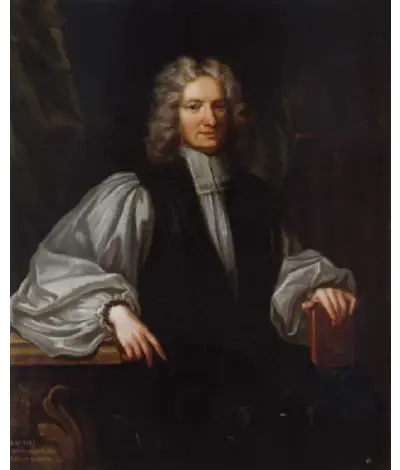
William King was an Anglican divine in the Church of Ireland, who was Archbishop of Dublin from 1703 to 1729. He was an author and supported the Glorious Revolution. He had considerable political influence in Ireland, including for a time what amounted to a veto on judicial appointments.
