H. G. Wells Quotes
The Anglo-Saxon genius for parliamentary government asserted itself; there was a great deal of talk and no decisive action.
Wells, H. G. The Invisible Man. C. Arthur Pearson, 1897, p. 226.


Zacharia read the quotation which the audience was sure was another of the many Republican attacks on Barack Obama’s foreign policy and his decision making. The Republicans came up with the same type rhetoric that they did in earlier years with Democratic Presidents starting with Harry Truman. There have always been some politicians and pundits who regard any President (or other leader) who takes time to gather facts, hear alternative views, consider and reflect upon them, and then reach a decision as week and indecisive—an intellectual. To them, a real man—a real leader—listens looks at an issue before him and shows decisiveness by not vacillating and making his decision relatively quickly. To them if it took that much time and thought to reach a decision the President is not confident that his is the right decision and that shows weakness. Of course, every senior leader knows that if the decision reaches him, there is no clear good solution. If there were, it would have been decided at a lower level. Ideologues however don’t like to acknowledge complexity.


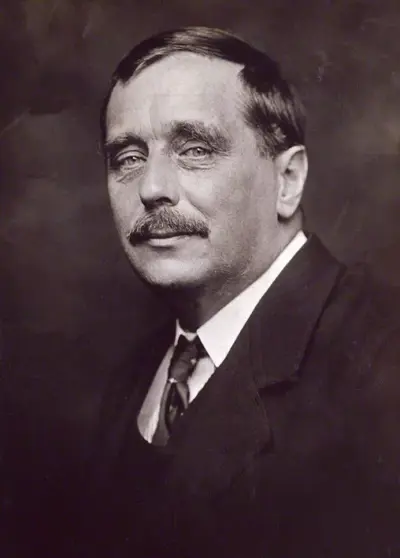
Herbert George Wells —known as H. G. Wells—was a prolific English writer in many genres, including the novel, history, politics, social commentary, and textbooks and rules for war games. Wells is now best remembered for his science fiction novels and is called a "father of science fiction", along with Jules Verne and Hugo Gernsback.[a] His most notable science fiction works include The Time Machine (1895), The Island of Doctor Moreau (1896), The Invisible Man (1897), and The War of the Worlds (1898). He was nominated for the Nobel Prize in Literature four times.
