Kenzaburo Oe Quotes
The ambiguous orientation of Japan drove the country into the position of an invader in Asia.
Oe, Kenzaburo. "Japan, the Ambiguous, and Myself." Japan, the Ambiguous, and Myself: The Nobel Prize Speech and Other Lectures, Kodansha International, 1995.

Japan’s militarism and aggressive tendencies were in evidence well before WWII.

The Japanese Government was in the control of ardent militarists intent on expanding the Japanese empire. They invaded Manchuria and had designs on China. The League of Nations was very weak, in large part because the United States had not joined when the Senate refused to ratify the treaty. So peace or war In Asia depended on the fascist, military clique that ruled Japan.


The Byzantine emissary had pointed out that Mehmed’s predecessors had signed a treaty agreeing to “consult” with Constantinople before building any fortified structure in the area surrounding Constantinople. Mehmed was only 19 years old at this time. His intention f building a fort was to have a platform from which to attack and capture Constantinople itself which he did 2 years later. Earlier, the Eastern Roman Empire was much stronger and the Ottoman sultans were more cautious in dealing with them. However, the various Christian factions were all feuding with each other, and Mehmed II, despite his youth, was much better organized and was a better leader than his predecessors.


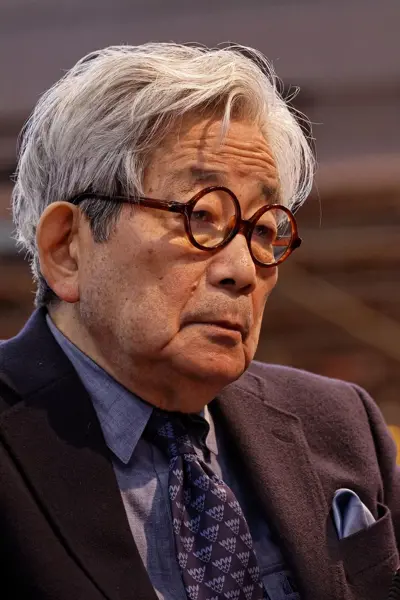
Kenzaburō Ōe is a Japanese writer and a major figure in contemporary Japanese literature. His novels, short stories and essays, strongly influenced by French and American literature and literary theory, deal with political, social and philosophical issues, including nuclear weapons, nuclear power, social non-conformism, and existentialism. Ōe was awarded the Nobel Prize in Literature in 1994 for creating "an imagined world, where life and myth condense to form a disconcerting picture of the human predicament today".
