William Falconer Quotes
The admiral, or commander in chief of a squadron, being frequently invested with a great charge, on which the fate of a kingdom may depend, ought certainly to be possessed of abilities equal to so important a station and so extensive a command.
Falconer, William. An Universal Dictionary of the Marine. T. Cadell, 1769.

George Washington had been appointed by the Continental Congress as Commander in Chief of the Continental Army but was politic about keeping Congress informed and not appear to be usurping authority. He asked Adams for an opinion of whether his authority reached beyond Boston to include the defense of New York City. Adams had been a member of the Congress that appointed Washington. Adams reply has been used as precedent for the broad authority of the President as Commander in Chief by those claiming broad Presidential power since.

China had then a very weak government. Ching Yih was the leader of a flotilla of over 1000 ships with entire crews and families numbering a force of over 70,000 people. They raided ships and towns on the coasts. Instead of single pirate ships, they would attack, even large, well armed, ships with a fleet. Some called them pirates; some thought of them as a floating nation. In 1807 the captains of all the ships met to select a new leader. One of the captains was the widow of Ching Yih, an admiral in her own right. The flotilla under Chin Yih had been divided into 4 fleets named for colors. The White fleet had been commanded by His Kai Ching—the only female captain. However, the White Fleet had been the most powerful and successful of the four. Ching surprised the men, who had expected to elect one of the 3 male admirals as the leader of the flotilla. After, her statement, they elected her. Of the females who have ever lead at sea, she commanded the largest armada and was the leader of a floating nation and an elected leader at that.


Gingrich, who avoided serving in the military throughout his life, was frequently opining on military matters, tactics and strategy in his speeches, media appearances and many writings. Generally, he was a Chicken Hawk {625110} urging military action and war although he had personally never experienced it. He spent much time in military meetings and conferences, and thought that he had developed some expertise from this and his extensive reading.


In the first year of WWI, the British Fleet kept the German Fleet bottled up in port. As a result, the British had a very successful sea embargo against the Germans who rarely challenged the British fleet even though they had some major, powerful, capital ships. See {642234}. Meanwhile, the German ships were in no position to harass much less destroy Allied (French, Russian or English) shipping.


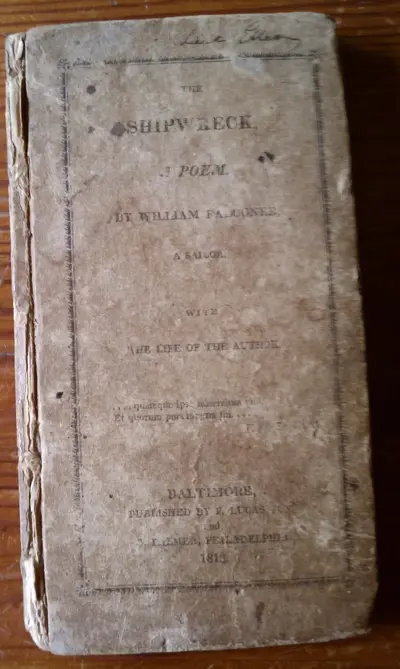
William Falconer was a Scottish epic poet concerned mainly with life at sea. He also compiled a dictionary of marine matters.
