Annie Jacobsen Quotes
The activities that went on at Camp King between 1946 and the late 1950s have never been fully accounted for by either the Department of Defense or the CIA.
Jacobsen, Annie. Operation Paperclip: The Secret Intelligence Program that Brought Nazi Scientists to America. Little, Brown and Company, 2014.

Kellis was the first of the Central Intelligence Agency whistle blowers. The President acted promptly on the letter and appointed General Jimmy Doolittle to conduct an investigation which confirmed the Kellis letter.


Intelligence agents tend to prefer covert activities to the less dramatic, non-exciting, activity of gathering and analyzing intelligence. Most national intelligence services tend to enlarge their portfolio to include covert activities regardless of what the national leaders intended. Because of the secrecy, they can often get away with this.


When Bob Casey was the CIA Director, he the declassification of all the operational files of the WWII Office of Strategic Service. The huge collection is referred to as Record Book 2.6


This was a critical shortcoming in that the NSA had the personnel for electronic intelligence. It was the major job of the CIA to place human agents—abroad—who could act as spies and/or recruit or manage spies.


Most of the successful intelligence agency administrators think that Cheney and some others are absolutely wrong that there should not be any discussion. There are times, of course, where secrecy is critical, but that does not mean that there cannot be classified discussion and coordination. Almost every one of the disastrous intelligence agency fiascos, could have been avoided if there were more and wider discussion in the planning. In many cases, Chaney, William Casey and others who hold their view prefer no discussions is that lawyers cannot block the operation on grounds of illegality. Or other agencies cannot get their priorities into the mix. If the NSA had discussed their plan to hack into the telephone calls of our most important allies with the State Department, the plan might not have gone through or if it had, the President would have been consulted. The Bay of Pigs was based on a set of assumptions that were not true and our government had a number of experts who could have debunked the assumptions the CIA planners were counting on which did not pan out.


The American Embassy in Berlin had wiretapped the telephone and telegraph wires of the German Foreign Ministry. The man who did that was hired by Secretary of State Lansing as the first employee of the new unit.

There was a military coup in 1973 which was supported by the United States -- {640618} . Many Chilean left wingers were tortured, murdered or disappeared. Also, two American citizens in Chile were murdered at the time. This case finally brought the murderers of the Americans from the military junta to account. However, it turned out that the murders of the Americans was part of a conspiracy between the Chilean junta and United States military / intelligence officers in Santiago at the time. The American murder victims were fingered by an American Naval Captain, Ray E. Davis, as leftists and they too were killed. Captain Davis had been indicted with the two Chileans, but he died before the trial. The Chilean judge was not able to indicate how high up the decision by the American officers to have the Chileans kill leftist Americans went. One important historical aspect of this case was meaningful because when the trial was finally conducted, there was a major policy debate in the United States over the right of the American government to kill American citizens abroad and under what circumstances with most people thinking that this was a new policy issue brought about by the development of drone technology and the War on Terror. However, this judge’s release of the information showed that Americans had been previously killed before drones. One major difference is that in the War on Terror case the President, Attorney General and other officials were the major decision makers while in the 1973 case in Chile, it may have been limited to a few rabid, over-zealous, mid-level officers, acting on their own. Or perhaps the kill decision went further. The documents relating to the murders are highly classified and the government has not yet released them at the time of this quotation.

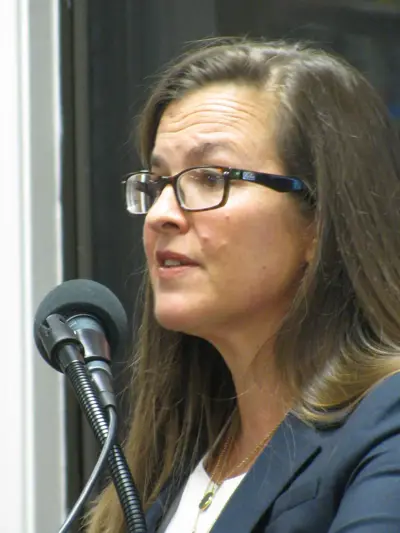
Annie Jacobsen is an American investigative journalist, author, and a 2016 Pulitzer Prize finalist. She was a contributing editor to the Los Angeles Times Magazine from 2009 until 2012. Jacobsen writes about war, weapons, security, and secrets. Jacobsen is best known as the author of the 2011 non-fiction book, Area 51: An Uncensored History of America's Top Secret Military Base, which The New York Times called "cauldron-stirring." She is an internationally acclaimed and sometimes controversial author who, according to one critic, writes sensational books by addressing popular conspiracies.
