Henry A. Kissinger Quotes
That man [Richard M. Nixon] is not fit to be President.
Henry A. Kissinger, U.S. Secretary of State (Republican), U.S. National Security Advisor, Remark to Nelson Rockefeller, 1968
Sourced by: Eigen's Political and Historical Quotations


Nixon’s remark {583773} had been suppressed by the Nixon family and McGovern and the world first heard it 40 years after the fact.


Nixon did not make Eisenhower’s first short list, but was finally selected.


This quotation illustrates an interesting phenomenon in American Presidential Politics. There have been Democratic Presidents (FDR and Obama are the most glaring examples) for whom there was vituperative hatred and derision from the conservative Republicans who would frequently refer to them as Socialists and would believe that they were trying to lead the country on the path to socialism. The Presidents always stated that they were opposed to socialism, but to little avail with their conservative haters. But the socialists of the times and even the left wing of the Democratic Party not only did not see them as socialists, but were not very supportive or complementary of their skills and capabilities. Roosevelt reveled in the situation and “welcomed: their hate. Obama was more of a public centrist who tried to avoid the president getting involved in the extreme partisanship of the day.


Armstrong rarely commented on politics (see {615854}), but the Governor defying the Supreme Court and not letting his people even go to school with other students was too much for him. He not only made the statement, but he approved it for publication. This shocked many who knew him as an apolitical person. He was particularly distressed with President Eisenhower who although he had warned Faubus that he would enforce the court order and then used federal troops to do so, Eisenhower was a man of action and not rhetoric and his lack of firm public statements overlooked an opportunity to use the Presidential “bully pulpit” and exercise his moral leadership and authority. Many then, and even 50 years later, were not sure where he stood on the issue of school desegregation.


Nixon however turned out to be very dishonest with the Watergate scandal allowing the public to see and hear what Nixon was really like. He was the only American President who resigned, as he did that to save himself from being impeached and tried for various fenonies he committed. Vidal had his number. However, Nixon was not a crook in the usual sense of the word. His violations of law and ethics did not enrich him fiscally. His corruption was the drive and mania for power and control.

The memo proposed having a good novelist write a fictional novel with Nixon as the main character. The great Nobel Laureate John Steinbeck was approached for the project. See {629628} for his reaction.


Bryant, like most New Englanders did not trust Jefferson and saw anything the President did in its worst possible light. He even believed that Jefferson’s great interest in science was evidence of his lack of respect for religion. Nothing he could do was right, much like the Tea Party and President Barack Obama more than 200 years later.

The candidates had remarkably little experience in foreign affairs with the exception of Jon Huntsman and Newt Gingrich who in the extreme right wing ideology driving the Republican primary voters at the time had little chance of winning as they were too far to the left for the Republicans of the time.


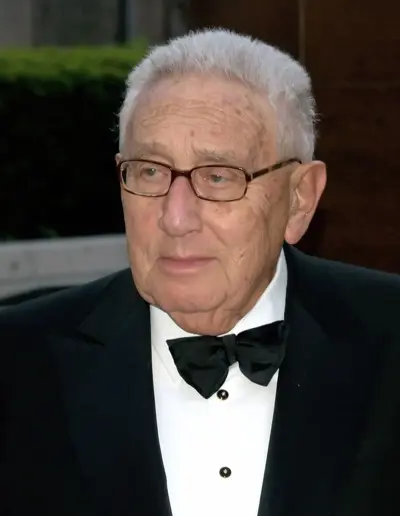
Henry Alfred Kissinger KCMG is an American politician, diplomat, and geopolitical consultant who served as United States Secretary of State and National Security Advisor under the presidential administrations of Richard Nixon and Gerald Ford. A Jewish refugee who fled Nazi Germany with his family in 1938, he became National Security Advisor in 1969 and U.S. Secretary of State in 1973. For his actions negotiating a ceasefire in Vietnam, Kissinger received the 1973 Nobel Peace Prize under controversial circumstances, with two members of the committee resigning in protest.
