Trent Lott Quotes
That is the way it is in America and it is what makes us a great nation. True leaders must handle difficult situations or have competent people who handle those situations. Sources did give information of a general nature to the Administration and it is obvious that an attack still occurred. This is a more 'impeachable' offense than what was brought before the Congress. Fortunately, George W. Bush will in just a few days become our President. I can assure you that such situations will not be mishandled by his Administration. However general the information might be, the President-elect will act with authority to prevent such tragedies
The Senator was blaming President Clinton for not stopping the attack on the U. S. Cole as he knew that there were hostile Islamic extremists who were known to have threatened to attack American assets wherever they were. His view was that given that President Clinton should have acted overtly and/or covertly to prevent the attack. This failure for him was an impeachable offence. He argued that George W. Bush was assuming the Presidency and this laxness and incompetence that lead to the death of 17 American sailors would end. And then came 9-11 with the same level of general information and some even more specific information and 3000 Americans were killed. However, unlike Lott, almost no one blamed President Bush’s lack of leadership for the attack on the Pentagon and the World Trade Center. Lott seemed to forget his standard of presidential performance and did not criticize or urge the impeachment of the President of his own party.
Trent Lott, U. S. Congressman & Senator (Republican, MS), Senate Majority Leader, Interview with the London Observer, January 2001
Sourced by: Eigen's Political and Historical Quotations


Actually, there are many in politics who to this day castigate Truman for his decision, but for Bloomberg’s generation and before, anyone would have pushed the button. And there are some who still fault Obama as technically, the U. S. had no right to violate Pakistani airspace and kill a resident of their state without any due process in the U. S. or Pakistan. Bloomberg would have easily pushed that button, but there are many officials who warned against it, and earlier Presidents—George W. Bush and Bill Clinton who did not authorize assassinations in foreign (allies) countries.


_0_PostageStamp_47x47.jpg "Chairman of the Joint Chiefs of Staff Navy Adm. Mike Mullen gives an interview to John Dickerson during the CBS news program Face the Nation in Washington, D.C., July 5, 2009. During the interview, Mullen discussed the wars in Iraq and Afghanistan, North Korea's recent missile tests and his recent visit to Russia. (DoD photo by Mass Communication Specialist 1st Class Chad J. McNeeley, U.S. Navy/Released)")

The “Principals Committee” is the senior interagency forum for consideration of policy issues affecting national security. It includes the National Security Director (Chair), the CIA Director, the Secretary of Defense and his Deputy, the Secretary of State and his Deputy, the Chairman of the Jount Chief’s of Staff, The Special Representative to the United Nations and other staff as invited. Clarke was almost always invited to these meeting when terrorism was discussed but he did not have a vote. This is a very important quotation for several reasons. First, it shows the influence that the Defense Department and CIA leaders had with President Bush before the 9-11 attack. It also illustrates dramatically how reluctant our military and CIA were to use drones. It was President Obama who overruled them and changed America policy to use Drones to protect American interests. It also indicates how there was a split regarding the perception of the danger of Al Qaeda and bin Laden with Clark and some of the other Principals placing more value on a military strike than the military and covert action leaders. This is not uncommon despite the fact that public perception is that it is always the military leaders who are the hawks. Also, it illustrates the problem of allowing the military point of view to always prevail in national policy making involving use of force. See {639322}.

That is one view—the one tried the most frequently by Presidents who by their own estimates didn’t get a responsive civil service working to his priorities. Presidents like Teddy Roosevelt, Franklin Roosevelt, and Dwight Eisenhower and Lyndon Johnson had great cooperation from their civil servants; they instead appointed very competent people with strong senses of fairness and leading personnel. Ronald Regan tried both techniques. He used Wilson’s technique in his Education and Justice Department where there was slow-rolling and dissonance when his appointees tended to be ideologues with little or no outstanding professional competence in the fields they supervised. However, his military and State Department bureaucracies was very responsive to his appointees who were excellent leaders.


While this probably was a slip of the tongue, President Bush and governor Perry both had civil right and individual had rights as a lower priority than a individual responsibility, strong growth economy or the military. There were many who really believed that the two men really thought excessive personal reedom a problem that people and the government must be protected from, like freedom for a woman to choose an abortion. For Perry in particular many thought that if this was a slip of the tounge, it was likely a Freudian slip as it what he really wants.


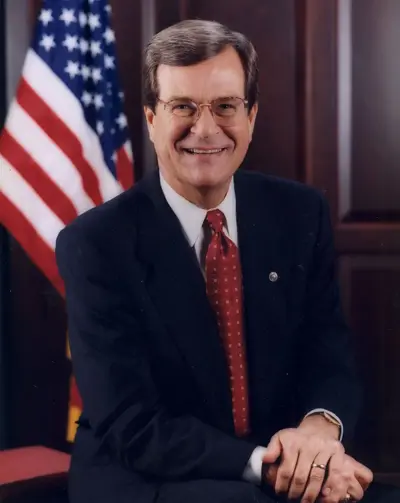
Chester Trent Lott Sr. is an American author and former politician. A former United States Senator from Mississippi, Lott served in numerous leadership positions in both the United States House of Representatives and the Senate. He entered Congress as one of the first of a wave of Republicans winning seats in Southern states that had been solidly Democratic. Later in his career, he became Senate Majority Leader, and, alternately, Senate Minority Leader. In 2003, he stepped down from the position after controversy due to his praising of senator Strom Thurmond's 1948 segregationist Dixiecrat presidential bid.
