Vladimir Lenin Quotes
Stalin is too coarse, and this fault, though tolerable in dealings among us Communists, becomes unbearable in a General Secretary. Therefore I propose to the comrades to find some way of removing Stalin from his position and appointing somebody else who differs in all respects from Comrade Stalin in one characteristic-namely, someone more tolerant, more loyal, more polite and considerate to his comrades, less capricious, etc.
Vladimir Lenin. Ironically it was Lenin who was among the first Russian leaders to recognize Stalin’s shortcomings. However, it turned out to be too late. He had enough strength and power in Russia to withstand attempts to depose him.
Nikolai Lenin, 1870-1924, Russian Communist Premier, Postscript to a letter to the Soviet Central Committee, December 23, 1922
Sourced by: Eigen's Political and Historical Quotations

Vladimir Lenin. Although Lenin’s letter was given to the Central Committee by his wife, it was not read or debated at the Congress and Stalin was elected.


Galloway, a witness before the committee who had always criticized the American and British Policy of Iraq invasion to eliminate weapons of mass destruction, had also predicted the insurrection and resistance to the American and British occupation had been attacked by Coleman for taking campaign contributions from British Islamic terrorists—see {616260}. Coleman expected the typical American hearing behavior where Senators can berate witnesses who generally behave docilely in defending themselves. He was not used to the English style of political debate which is much more aggressive and Colemen was nonplussed when Galloway came up with this put down.


President Johnson was trying to organize peace talks in Paris. Nixon didn’t want a public announcement to occur before election day when he was running against Hubert Humphrey. Knowing the South Vietnamese President was reluctant to go to Paris but was under pressure from America to do so, he sent a message through Chennault that he should not accept and “hang on” as Nixon would shortly win. The South Vietnam president refused to go to Paris, Nixon won the election, and then had to cope with the continuation of the war that might well have ended before he took office. Nixon believed that he could get Russia and China to pressure Ho Chi Min to make peace. Nixon's private overtures to the South Vietnam president, violated the Logan Act which prohiited private citizens negoatioating with foreign governments. President Johnson was aware of Nixon's commission of this felony want wanted to prosecute him, but the evicence had been obtained from secret intelligene agency bugging and wiretapping both the South Vietnam Embassay in Wishington and the Presidential Palace in Vietnam the public knowledge of which would have caused a scandal. Instead, he called Nixon and warned him to stop, but the damage had already been done, and the South Vitenamese government would not go to Pariis where they would have to agree to a coalition government with the Communists. THey waited for Nixon to deliver a peace treaty which would leave them in charge of South Vietnam. In the final analysis, the South Vietnamese ended up with nothing and no participation in anything when the U. S. Withdrew and the Communists took over.


The great European powers were attending an International Congress—Summit Meeting of the heads of government and their diplomats to deal with the crisis of Tsarist Russian military expansionism. None of the other European powers of the time wanted or could afford war so Russia could only be thwarted by Great Britain. There were many in England who thought that the British should not even attend and should send troops immediately. The Queen and the Royal Family were among those. At the Congress Disraeli, who had much personal affection for Queen Victoria, wanted to reassure her. 1st Earl of Beaconsfield. If the Congress did not succeed the mainland of Europe would have been at war. Disraeli obtained everything England wanted. See Russian Ambassador Prince Gortchakoff’s observation.

Such intellectuals as Max Eastman. John Dos Passos, and James Rorty were officially so classified.


The papyrus appears to be an instruction booklet for government officials.


Grigory Zinoviev was one of the original leaders of Revolutionary Russia and the early Communist Russian Government. The reason that this is a noteworthy quotation is that it shows that flip flops and hypocrisy seem to be present in all political systems, democratic as ours is as well as others.


From the 1787 Philadelphia discussions on the Constitution right up to the Civil War there was compromise after compromise on the slavery issue. Many political issues are amenable to compromise like tax rates or election modalities. Others like freedom of religion and speech and slavery are not. With the latter, compromise just delays the inevitable and often makes the final resolution more contentious and often violent.


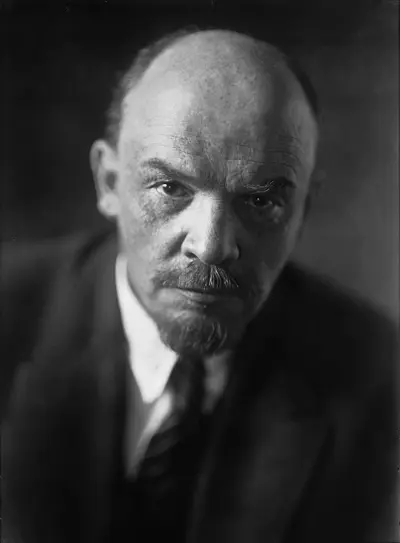
Vladimir Ilyich Ulyanov, better known by his alias Lenin, was a Russian revolutionary, politician, and political theorist. He served as the first and founding head of government of Soviet Russia from 1917 to 1924 and of the Soviet Union from 1922 to 1924. Under his administration, Russia, and later the Soviet Union, became a one-party socialist state governed by the Soviet Communist Party. A Marxist, he developed a variant of this communist ideology known as Leninism.
