Carl Schmitt Quotes
Sovereign is he who decides on the exception.
Schmitt, Carl. Political Theology: Four Chapters on the Concept of Sovereignty. Translated by George Schwab, MIT Press, 1985, p. 5.

Gets was commenting on the Apple Computer Company who refused to obey a court order to create a program that would break into any iPhone. Apple thought the court order was not only bad public policy, but was not legal, so they refused and appealed to start the legal process. However, the FBI which had claimed that they had no other way to view some critical investigative data, found one, and not wanting the case to go to higher courts where they might or might not lose, the dropped the case, thus stopping the legal appeal as in the United States courts will hot hear theoretical cases as they will in some countries. Since apple was not in danger of being held in criminal contempt any longer the could not longer appeal.


William the Conqueror. The King had come ashore and fell forward in the sand on his face and hands. Showing a sense of humor, he hade this statement. Shortly thereafter he took England militarily at Hastings and seized it politically.

_0_thumbnail_47x47.jpg)

This phrase was used on all royal decrees and it accurately reflected the Bourbons “divine right” to rule

Waite said that exempting plural marriage from criminality under the guise of religious freedom was to make religion superior to the law


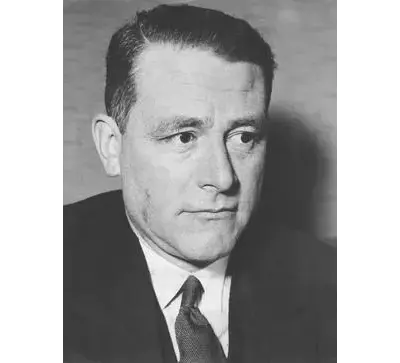
Carl Schmitt was a German jurist, political theorist, and prominent member of the Nazi Party. Schmitt wrote extensively about the effective wielding of political power. A conservative theorist, he is noted as a critic of parliamentary democracy, liberalism, and cosmopolitanism, and his work has been a major influence on subsequent political theory, legal theory, continental philosophy, and political theology, but its value and significance are controversial, mainly due to his intellectual support for and active involvement with Nazism. Schmitt's work has attracted the attention of numerous philosophers and political theorists, including Giorgio Agamben, Hannah Arendt, Walter Benjamin, Susan Buck-Morss, Jacques Derrida, Jürgen Habermas, Waldemar Gurian, Jaime Guzmán, Reinhart Koselleck, Friedrich Hayek, Chantal Mouffe, Antonio Negri, Leo Strauss, Adrian Vermeule, and Slavoj Žižek, among others.
