Morrison R. Waite Quotes
Superior to the law of the land.
Waite said that exempting plural marriage from criminality under the guise of religious freedom was to make religion superior to the law
Morrison R. Waite, 1816-1888, Chief Justice, U. S. Supreme Court, Reynolds v. the United States, 1879
Sourced by: Eigen's Political and Historical Quotations


The use of “despotic” did not imply cruelty or even poor management of the society. The term was used to indicate that Brigham Young, the then Mormon Leader, had the powers and authority of a dictator. At the time most Americans in the East knew little about the Mormons. Ludlow was one of the early observers of Mormon society in Utah who wrote about the Mormons in popular—albeit intellectual—magazines. Ludlow regarded Mormonism as it was then practiced as incompatible with, and dangerous for, America, not because of the plural marriage, but the conflicts with the concepts of democracy and self-government. The authority that Brigham Young and the church then exercised over civil life was what distressed him and many other Americans.


Cleopatra was an outstanding ruler who spoke 9 languages and depended on relatively few advisors.

This editorial was an excellent summary of the issue of Mormon polygamy where both sides are described. The Thugs were a violent religious sect in India where females were forced into marriage.
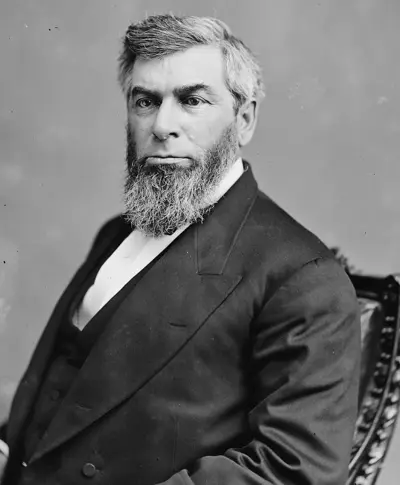
Morrison Remick "Mott" Waite was an attorney, judge, and politician from Ohio. He served as the seventh Chief Justice of the United States from 1874 to his death in 1888. During his tenure, the Waite Court took a narrow interpretation of federal authority related to laws and amendments that were passed during the Reconstruction Era to expand the rights of freedmen and protect them from attacks by vigilante groups such as the Ku Klux Klan.
