Steve Largent Quotes
Sometimes Congress likes to milk an issue.
Largent, Steve. Quoted in "Partisan bickering stalls House." Roll Call, 18 May 1998, p. 12.


Emanuel argued that when the nation faced a crisis of one kind or another, and the administration had to take steps to cope with the crisis or ameliorate it, the time is often opportune to get some of their legislative program passed or reform areas that have been resistant.

Congress at that time had about a 12 percent public approval rating. Other emergency disaster appropriations had been made in previous years in days or weeks, but the aid for New Jersey, New York and Connecticut had been voted by the Democratic-controlled Senate but not in the Republican controlled House. The Republican House leadership had planned a vote after the Fiscal Cliff vote the previous evening before the end of the Congressional term. Then the speaker cancelled the vote infuriating Christie and many of the members of Congress. His reason was that there was opposition from the Tea Party Conservative wing of his own party who had just been badly beaten on the fiscal cliff legislation, and the Speaker was up for reelection by his own party caucus the following day. If the vote had proceeded, it would have passed with Democratic and some Republican support but with the opposition of the conservative wing some of whom noted that the states seeking the emergency aid had just recently voted for President Obama and they were opposed to more federal spending despite the fact that emergency aid had never before been subjected to such partisan criteria. After much pressure, the Speaker then committed to an up or down vote in the following Congress to the chagrin of some of the Tea Party members. Governor Christie, much admired for his commitment to his state and not politicking was his candid self but he did not even go as far as Republican Congressman Peter King {630995}.


He and his Prime Minister, John Majors, had become so unpopular, that they were forced to resign by their own Conservative Party and never had to be voted out of office.


Boehner’s Republicans controlled the House of Representatives. However the Democrats controlled the Senate and Obama, the president, was a Democrat. So while Boehner could block any legislation, he could not pass legislation that the Republicans wanted. So the speaker resorted to the tactic of holding for ransom import legislation unless the President and the Democrats would pass legislation that the majority of the public and the Democrats were against. In this case it was the debt ceiling limit. The United States spends money authorized by Congress and then has to pay the bills. When the country is growing, the government has to borrow money in order to meet its obligations and pay bills. Congress must authorize the increase in the debt limit. Boehner held the debt limit hostage until Obama would agree to spending cuts that were unpopular with the majority. A problem for the Republicans with this strategy however was that the government would not have enough money to pay the regular bills and the government would have to slow down. This was considered a most unpatriotic thing to do and one would put the United States full faith and credit at risk. Republicans justified it on the grounds that spending money as the government was doing was worse and therefore it requires extreme measures. This was not the only occasion where a political party put its ideology ahead of the welfare if the nation as a whole. But in those few past occasions the party doing this was not overt about it, and could never be accused of blackmailing. What made this quotation remarkable was that it was the first time that the politician was very explicit about the blackmail strategy. President Obama actually caved in a bit and compromised and reduced spending so the debt ceiling was raised. Earlier, President Clinton had the same tactic tried on him but he let the Government shut down, and after a few days, The political heat on the Republicans were so great that they had to raise the debt ceiling and reopen the government.

In the beginning of the 21st century political hyper-polarization made Congressional gridlock the norm. Anything that was acceptable to the Democrats would be rejected by the Republicans and vica versa. However, at times, the public would be impassioned by events and demand Congressional action. A movement for gun control after a serious of massacres with assault weapons in 2012 was the example that Thomas was using. If the legislative process could be stretched out until public passions waned, the normal gridlo{78528}k would control and there would be no reform.

This was one of the worst Congresses in American History and had the worst productivity record—passing very few bills, and none of any significance. The anti-government, Tea Party hyper-conservative Wing of the Republican Party intimidated the Speaker of the House and they were opposed to any compromise at all on anything.


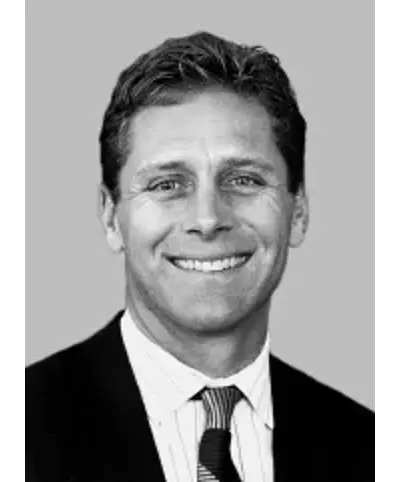
Stephen Michael Largent is an American former professional football player, enshrined in the Pro Football Hall of Fame, and a former Republican politician, having served in the U.S. House of Representatives for Oklahoma, from 1994 until 2002. Prior to his political career, Largent was a wide receiver for the Seattle Seahawks in the National Football League for his entire 14-season professional football career. He held several all-time receiving records when he retired and is considered one of the greatest wide receivers of all-time.
