Tony Snow Quotes
I hate to tell you, but it's not always pretty up there on Capitol Hill
Tony Snow, White House Press Secretary (Republican), Remark to reporters about sex scandals in the Congress, October 2, 2006
Sourced by: Eigen's Political and Historical Quotations


Congress at that time had about a 12 percent public approval rating. Other emergency disaster appropriations had been made in previous years in days or weeks, but the aid for New Jersey, New York and Connecticut had been voted by the Democratic-controlled Senate but not in the Republican controlled House. The Republican House leadership had planned a vote after the Fiscal Cliff vote the previous evening before the end of the Congressional term. Then the speaker cancelled the vote infuriating Christie and many of the members of Congress. His reason was that there was opposition from the Tea Party Conservative wing of his own party who had just been badly beaten on the fiscal cliff legislation, and the Speaker was up for reelection by his own party caucus the following day. If the vote had proceeded, it would have passed with Democratic and some Republican support but with the opposition of the conservative wing some of whom noted that the states seeking the emergency aid had just recently voted for President Obama and they were opposed to more federal spending despite the fact that emergency aid had never before been subjected to such partisan criteria. After much pressure, the Speaker then committed to an up or down vote in the following Congress to the chagrin of some of the Tea Party members. Governor Christie, much admired for his commitment to his state and not politicking was his candid self but he did not even go as far as Republican Congressman Peter King {630995}.


Hollings who was one of the senior experienced senators was offended by the degree to which the George W. Bush Administration and the Republican leadership had turned to lobbyists to draft legislation and amendments to pending legislation. Lobbyists often have specialized information that members of Congress do not have, so there has been in modern times communications between lobbyists and members of Congress and their staffs. However, during the Bush Presidency the practice reached an extreme where lobbyists would even write the legislative language and give it to the members in whom they had invested by giving them large campaign contributions and many perks. K Street is the fanciest street in Washington DC with some of the most expensive office space. A substantial proportion of the lobbyists have K Street offices, hence the metaphor.


The Congress was in a hyper-partisan gridelock and was unable to pass most legislation.


This was one of the most remarkable statements made by a Congressional leader. At the time, the Congress was in the midst of one of the worst stalemates in American Political History. The national debt limit had to be raised in order to legally pay for the expenses that the Congress had voted for and the President had approved. A minority of the House—the Tea Party--tried to use the necessary legislation to get a program of theirs legislated when they did not have the votes to pass it in both houses of Congress. The House would not approve any solution that the Senate would pass, and the Senate would not pass any of the House proposals. The Boenner and the President had reached a compromise but the minority of his own party refused to go along and threatened to oust the Speaker and not vote for the Compromise. To them, compromise was surrender and doing business as usual. At the same time, the left wing of the President’s party did not want to vote for the Compromise plan that the President and the Speaker had worked out. Then the Minority Leader of the Senate, create a new plan that would transcend solve the immediate problem and defer the larger issues which would continue to be debated. The Senate Majority Leader agreed to go along with it and so did the President, but the Minority Leader’s fellow Republicans in the House refused to vote for that compromise. The President and then Boenner went on national television sequentially to explain the situation and the Speaker made this famous quotation, Boenner, we caught in an impossible situation. His Tea Party faction insisted that there need not be a stalemate. The President and the Senate needed the debt limit raised and they would have to give in and vote for the Tea Party plan. Almost all of the Tea Party members were new to Congress and Bonner realized that an entire party who controlled the Senate would never be blackmailed that way, and even if they did, the President would Veto. Yet his own deputy was preferred by the Tea Party and some others, so if Boenner tried to act statesman like, he was risking his speakership. So he became the spokesperson of the Tea Party wing and denied what 90 percent of all Americans knew to be true. Usually absurd statements clearly contrary to the facts at the time are the results of mistakes or gaffs. Occasionally, a more complex situation explains it.


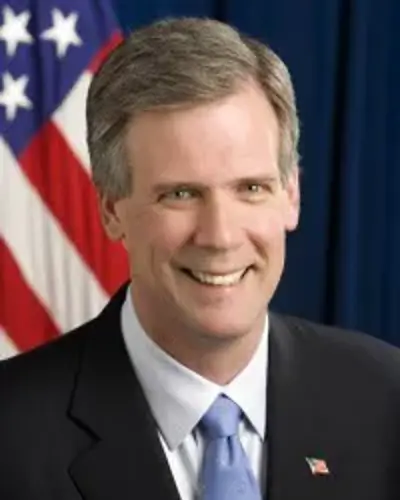
Robert Anthony Snow was an American journalist, political commentator, television news anchor, syndicated columnist, radio host, musician, and the 23rd White House Press Secretary under President George W. Bush, from May 2006 until his resignation in September 2007. Snow also worked for the first President Bush as chief speechwriter and Deputy Assistant of Media Affairs, from 1991 to 1993. Between his two White House stints, Snow was a broadcaster and newspaper columnist. After years of regular guest-hosting for The Rush Limbaugh Show and providing news commentary for National Public Radio, he launched his own talk radio program, The Tony Snow Show, which went on to become nationally syndicated. He was also a regular personality on Fox News Channel beginning in 1996, hosting Fox News Sunday and Weekend Live, and often substituting as host of The O'Reilly Factor. In April 2008, Snow briefly joined CNN as a commentator. He also made several notable speeches, including keynote addresses at the Conservative Political Action Conference in 2007 and 2008. In his journalistic and governmental capacities, Snow generally supported conservative causes. Snow died of colon cancer on July 12, 2008.
