Honore de Balzac Quotes
Some troubles, like a protested note of a solvent debtor, bear interest.
Balzac, Honoré de. A Daughter of Eve. Translated by Katharine Prescott Wormeley, Roberts Brothers, 1895, p. 84.


The treaty ending the Revolutionary war guaranteed that the English bankers and merchants who had debts going back to before the American Revo
lution would have “no impediment” in collecting their debts in America. However, Rhode Island and Virginia in particular placed many impediments and made it virtually impossible for debts to be collected in their states. The John Jay led Supreme Court, in particular, overturned state actions on the grounds that they had implemented Patrick Henry’s sentiment and hence violated the treaty.


This quotation illustrates the method by which the Ancient Jews (also modern ultra orthodox Christians and Jews coped with the problem of inequality of wealth and the problem of a permanent poor and debtor class. It was a form of redistribution of wealth. As a practical manner, this passage had a profound influence on the Jewish and early Christian cultures. Namely there was not a great deal of lending or borrowing amongst the Jews. However, Jews were able to obtain repayment for longer than the 7 years if they made a loan to foreigners. The early Christians had the same stricture. So Jews could lend money to Christians and Christians to Jews without being required to forgo collection ever 7th year. So for Christians, Jews were money lenders which is where the Jewish money lender stereotype had its origin.


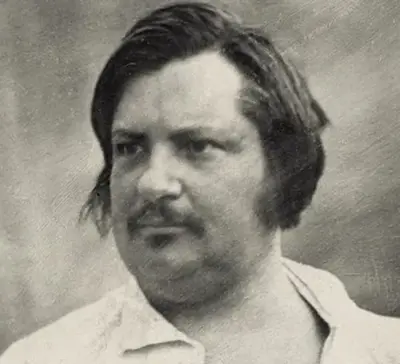
Honoré de Balzac was a French novelist and playwright. The novel sequence La Comédie humaine, which presents a panorama of post-Napoleonic French life, is generally viewed as his magnum opus.
