Robert Nozick Quotes
Some communities will be abandoned, others will struggle along, others will split, others will flourish, gain members, and be duplicated elsewhere. Each community must win and hold the voluntary adherence of its members. No pattern is imposed on everyone, and the result will be one pattern if and only if everyone voluntarily chooses to live in accordance with that pattern of community.
Nozick, Robert. Anarchy, State, and Utopia. Basic Books, 1974, p. 311.


The U. S. Federal Government was not necessary of required for progress in most of the country, thought it usually helped. In most States, there was decentralization—especially where there were cities which initiated many projects and created infrastructure—often in concert with local businesses or entrepreneurs. The largest public works and economic development project of this era was the Erie Canal, which the Federal Government did not think was feasible so NY State financed and built it themselves. This system worked well in the North and Midwest, but the South lagged far behind and had relatively few “undertakings.” The ones of the rest of the country were, to a European, amazing for their initiative, dynamism, and decentralization.


Cuomo was addressing fellow Roman Catholics, but the principle applies to all groups.
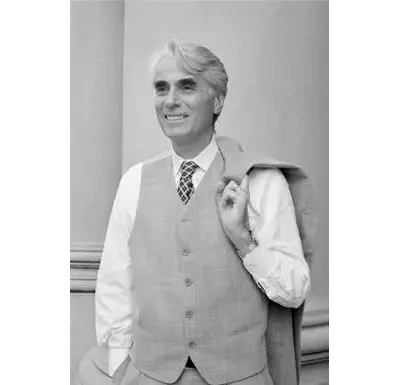
Robert Nozick was an American philosopher. He held the Joseph Pellegrino University Professorship at Harvard University, and was president of the American Philosophical Association. He is best known for his books Philosophical Explanations (1981), which included his counterfactual theory of knowledge, and Anarchy, State, and Utopia (1974), a libertarian answer to John Rawls' A Theory of Justice (1971), in which Nozick also presented his own theory of utopia as one in which people can freely choose the rules of the society they enter into. His other work involved ethics, decision theory, philosophy of mind, metaphysics and epistemology. His final work before his death, Invariances (2001), introduced his theory of evolutionary cosmology, by which he argues invariances, and hence objectivity itself, emerged through evolution across possible worlds.
