Mark Twain Quotes
Solomon, who was one of the Deity's favorites, had a copulation cabinet composed of seven hundred wives and three hundred concubines. To save his life he could not have kept two of these young creatures satisfactorily refreshed, even if he had fifteen experts to help him. Necessarily almost the entire thousand had to go hungry for years and years on a stretch. Conceive of a man hardhearted enough to look daily upon all that suffering and not be moved to mitigate it.
Twain, Mark. Letters from the Earth. Harper & Row, 1962.


Since rape was forbidden by the Koran, the mullahs of the time came up with the concept of a temporary marriage. If a Muslim conqueror “married” a local woman after killing the husband, she could not properly refuse him without being beaten severely which was allowed by Islamic law for a recalcitrant wife. Then the man would leave his “wife” and take another one. There are many scholars who credit the rapid rise of Islam in the Indian sub-continent to this practice. Tragically the same practice of mass rape is still being employed by some Arabs as in the Sudan—as in earlier times encouraged and abetted by the authorities and not chastised by the mullahs of the time. Given the brutal sexual behavior of the Arabs towards non-Islamic women, the tenderness and protection of their own women is surprising to many.

Luther’s logic was that polygamy was sanctioned in the Old Testament and never specifically forbidden in the New Testament. This fact totally puzzled the American Mormons when the Protestants railed against the immorality of their plural marriages.


This editorial was an excellent summary of the issue of Mormon polygamy where both sides are described. The Thugs were a violent religious sect in India where females were forced into marriage.
Colton also ordered the Abbot to have no further mistresses. There was a basic concern about and prejudice against the Irish for their relatively promiscuous norms regarding sex. See {639438}.
This was the first public outing of Thomas Jefferson’s sexual relationship with his slave Sally Hemmings.


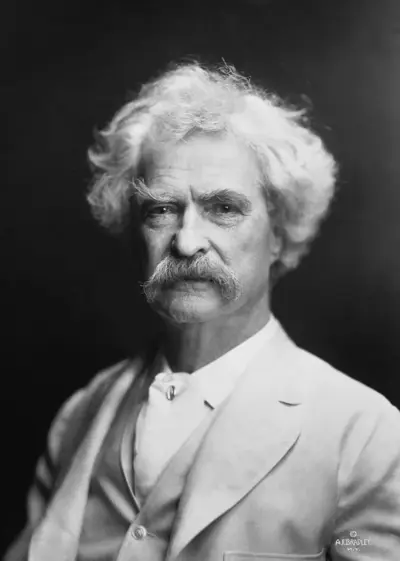
Samuel Langhorne Clemens, known by his pen name Mark Twain, was an American writer, humorist, entrepreneur, publisher, and lecturer. He was lauded as the "greatest humorist the United States has produced," and William Faulkner called him "the father of American literature". His novels include The Adventures of Tom Sawyer (1876) and its sequel, the Adventures of Huckleberry Finn (1884), the latter often called "The Great American Novel".
