Thomas Bailey Aldrich Quotes
Slavery in New Hampshire was never legally abolished, unless Abraham Lincoln did it. The State itself has not ever pronounced any emancipation edict.
Aldrich, Thomas Bailey. An Old Town by the Sea. Houghton, Mifflin and Company, 1893, p. 48.


While Lincoln was morally opposed to slavery, at the time the Civil War was not going well for the Union. The Emancipation Proclamation caused the South great distress in terms of practicality and their morale. The slaves if they escaped could come to a Union State and would be forever free. The South would lose labor that they could ill afford to lose as well as they were forced to devote more white manpower to keeping the slaves in bondage. While most people think the Proclamation freed all the slaves, it did not; it only freed slaves in the rebellious Southern states. Border states such as Maryland, not in rebellion, could keep their slaves legally and did until they were freed later.

This Civil War recruiting poster was described by the Free Library of Philadelphia as “Civil War recruitment print targeting African Americans by evoking the freedoms granted by the Emancipation Proclamation. Depicts a montage of symbolic scenes centered around an African American Union soldier triumphantly holding up a sword and an American flag with the banner "Freedom to the Slave." He stands near broken shackles upon a tri-color flag adorned with a coiled snake. The flag is tugged upon by one of three joyous slaves freed by an African American soldier. Other scenes depict an African American man reading a newspaper on a rocking chair near a plow and child, African American children entering a "Public School" near a church, and a regiment of "U.S. Colored Troops" marching across a battlefield strewn with dead bodies.”

Lincoln had promised amnesty to Southerners who would pledge loyalty to the Union. What many feared was that this would include slave owners re-enslaving their former "property," or that the government would allow them to do so in order to stop the rebellion.
Lincoln was then a Whig campaigning for his party.

In April, 1784, the Continental Congress passed a series of laws that Jefferson had drafted for the NorthWest territory—Ohio then being the west and the states that would develop there. However, the quotation is the clause that the Southern States blocked and hence did not become law, as the Soothers states cared little about the status of the area regarding slavery, but feared that the new states wold become a sanctuary for runaway slaves. It was another case where Jefferson attempted to end slavery. It also was yet another example of the unwieldiness of the Continental Congress to manage the new nation which led up to the Constitutional Convention of 1787. Ironically, as a price for union, the Southern States demanded and obtained a disproportionate representation in the New House of Representatives by having 60 percent of their slaves counted inzallocating congressional seats. The senate also worked in their favor as there were enough Southern states to block any attack on slavery in the Senate. There was no democratic way to eliminate slavery and the Civil War resulted. However, Jefferson’s proposed law was passed by the last Continental Congress in June, 1787. The difference was that there was also added a proviso that required the return of all runaway slaves from the new territory and states which was lacking in the earlier attempt.


At the time, the prevailing federal policy was to return fugitive slaves to their owners. Lincoln was intent on keeping Kentucky and Maryland, both slave states, in the union, even at the cost of returning fugitive slaves. Shortly after, he came up with the policy of always returning fugitive slaves except in the rebellious states of the confederacy where the slaves were legally defined as ‘contraband’—war material, and thus could be seized by Union forces. Many fugitive slaves were thus employed by the Union for construction projects. Later, the Emancipation Proclamation set the slaves of the Confederacy free.
This quotation is often given by those who argue that Lincoln really did not care about the slavery issue. It is a terrific example of the limitations of quotations where there is artful rhetoric. Douglas, had in the 1st debate posed 7 “interrogatories” to Lincoln asking if he were pledged to certain positions regarding slavery. Douglas was trying to associate Lincoln with the most radical abolitionists in the land. By asking if Lincoln were pledged to the positions, Douglas thought that he had cornered Lincoln. For if Lincoln denied the pledges, he would appear to be backing off his anti slavery positions, and if Lincoln would not, then he would appear to support the most radical elements. Lincoln turned the rhetorical tables on his opponent. He first answered the question literally, emphasizing “pledged”. Just as Douglas thought he had forced Lincoln off his anti-slavery views, Lincoln stated what he would “like to see” as opposed to what he was pledged for. See {615826}.


This was Lincoln’s first anti—slavery speech and it was memorable

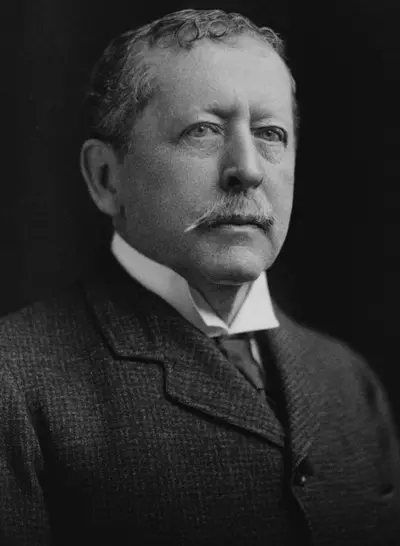
Thomas Bailey Aldrich was an American writer, poet, critic, and editor. He is notable for his long editorship of The Atlantic Monthly, during which he published writers including Charles W. Chesnutt. He was also known for his semi-autobiographical book The Story of a Bad Boy, which established the "bad boy's book" subgenre in nineteenth-century American literature, and for his poetry.
