Thomas Moore Quotes
Shall I ask the brave soldier who fights by my side in the cause of mankind, if our creeds agree?
Thomas Moore, 1779-1852, Irish Poet, Come, send round the Wine
Sourced by: Eigen's Political and Historical Quotations


The Iroquois had a very successful confederacy of 6 tribes in a relatively democratic government with a written constitution. They dominated the Eastern part of North America for years. The were able to maintain a permanent unity with a unified and decentralized combination of government—much like the United States would become. At the time of this advice, each American colony was a government unto itself. The three Iroquois Indian delegates were Canassatego, Tachanoontia, and Gachradodow.

This quotation was used by Aga Kahn III in his famous speech to the League of Nations, October 6, 1937. It speaks of the unity of the Muslims, Jews and Christians from an Islamic scholar of the 13th Century.


Samuel Langhorne Clemens, 1835-1910


This is a remarkable quotation. Here was a leading minister of the Established Church of England who is arguing that there should be no established church insofar as religious belief is concerned. Essentially this is what England has developed. The Anglican Church is still the established church but only for purposes of state cerimonies and the religion of the Royal Family. The establishment has nothing to do with lawmaking, or common religious belief or inhibition of the many other religions in England and there is complete freedom of conscience.

This would be like an American President firing the congressional chaplains. However this is only one small, but telling, example of Atatuk’s secularization of the nation which had a great deal to do with Turkey becoming a modern great power—by far the strongest and most developed of the Islamic world.


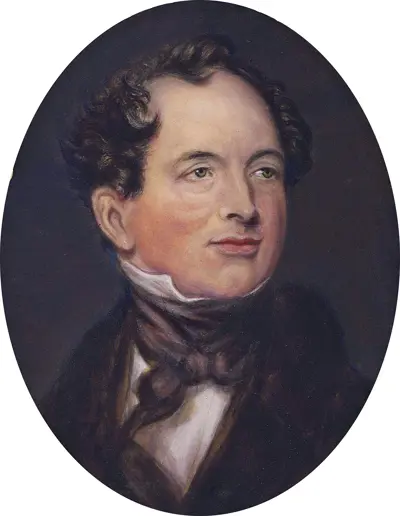
Thomas Moore was an Irish writer, poet and lyricist celebrated for his Irish Melodies. Their setting of English-language verse to old Irish tunes marked the transition in popular Irish culture from Irish to English. Politically, Moore was recognised in England as a press, or "squib", writer for the aristocratic Whigs; in Ireland he was accounted a Catholic patriot. Married to a Protestant actress and hailed as "Anacreon Moore" after the classical Greek composer of drinking songs and erotic verse, Moore did not profess religious piety. Yet in the controversies that surrounded Catholic Emancipation Moore was seen to defend the tradition of the Church in Ireland against both evangelising Protestants and uncompromising lay Catholics. Longer prose works reveal more radical sympathies. The Life and Death of Lord Edward Fitzgerald depicts the United Irish leader as a martyr in the cause of democratic reform. Complementing Maria Edgeworth's Castle Rackrent, Memoirs of Captain Rock is a saga, not of Anglo-Irish landowners, but of their exhausted tenants driven to the semi-insurrection of "Whiteboyism". Today, however, Moore is remembered almost alone either for his Irish Melodies (typically "The Minstrel Boy" and "The Last Rose of Summer") or, less generously, for the role he is thought to have played in the loss of the memoirs of his friend Lord Byron.
