Laurie Garrett Quotes
Scientists and security experts will never come to a consensus about the risks of dual-use research in synthetic biology..
Their cultures, training and education are totally different, but most important their missions are intrinsically different. The security experts have failed if there is a single serious fatal accident or public exposure to a toxic or dangerous substance. The scientists know that they only way to eliminate all risk is to eliminate scientific research.
Laurie Garrett, Pulitzer Prize Winning Scientific Journalist, Senior Fellow for Global Health, Council on Foreign Relations, “Biology’s Brave New World: The Promise and Perils of the Synbio”, Foreign Affairs, November – December 2013
Sourced by: Eigen's Political and Historical Quotations


See {637149} for a fuller explanation and definition of DURC.


One classic example is the scientist who is testifying before a Congressional Committee. Typically if there is a political issue, the politician of each viewpoint will find a scientists who supports their view. In a huge country, they can always find on or two to support any idea regardless of its validity. In the world of science, the scientist who has been doing experiments in a field for years and has published articles in peer-reviewed journals, teaches other scientists who do outstanding work, and have won prizes or accolades from his/her peers is given much more credibility than the scientist who has none of these accomplishments and just may have a different point of view and claim that the first scientist is in error UNLESS the critical scientist can show mathematical or other scientific proof that the first is wrong. Often in politics, the lesser critical scientist offers questions which the leading scientist cannot answer bit in science that proves nothing. There is ALWAYS much more a scientists does NOT know about an area than he does know. See {623513}.


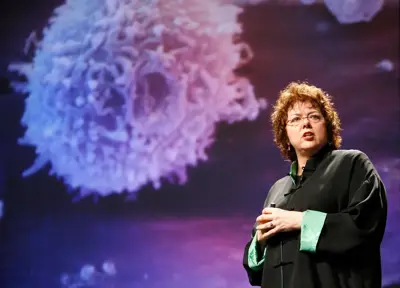
Laurie Garrett (born 1951) is an American science journalist and author. She was awarded the Pulitzer Prize for Explanatory Journalism in 1996 for a series of works published in Newsday, chronicling the Ebola virus outbreak in Zaire.
