Jorgen Randers Quotes
Regulators, who could in principle consider both economic growth and larger social needs, do not receive the necessary political mandates from short sighted voters who want low taxes and cheap prices.
Jorgen Randers, Norwegian Business & Environmentalist, Deputy Director General of the World Wildlife Fund International, Served on the board of Tomra in Norway, British Telecom in England and The Dow Chemical Company in the USA, “It’s A Small World”, Foreign Affairs, September / October 2012
Sourced by: Eigen's Political and Historical Quotations


Contrast this statment with Charles Wilson's regarding General Motors and the country.


Many corporate executives were claiming that they were not investing in growth and jobs because they were uncertain about the future tax rates or regulatory environment with which they would be coping. But with elections coming up, there has never been such certainty, and much of the best growth in American business was in the Clinton administration where these policies were under constant debate. Immelt identified the real problem: Demand for products and services was very weak.

This quotation was very important because the most important economic principle of Republican ideology since the 1960s has been that tax cuts will produce economic growth and the converse: that tax increases will stifle economic growth. For 50 years the Republican nostrum for all economic problems has been to increase growth by cutting taxes and opposing all tax increases. However Leonhardt studied the data and results since 1987 and found that the Republican doctrine had been wrong. Economic growth plummeted when we had the largest tax cuts in the George W. Bush years and the greatest growth spurts were following the 1990 George W. Bush tax increase and the 1993 Bill Clinton tax cuts. When the data became public some Republicans took the view that taxes were just one of the factors determining economic growth and have been overwhelmed by other factors. Some Democrats argue that if this were really believed by Republicans, they would have favored these other factors more so than tax cuts when in fact tax cuts are always their nostrum.


Kennedy, with great Republican support proposed a reduction of the top income tax rate from 91% to 65%, reduction of the bottom rate from 20% to 14%, and a reduction in the corporate tax rate from 52% to 47%. That put the tax rates at the appropriate level. Economic growth was reasonable until President Reagan’s military spending cold war strategy produced huge deficits, Clinton raised the tax rates slightly and had the best economic growth ever, and had a balanced budget. George W. Bush lowered taxes had much slower growth and even larger deficits. However, by 2013 all hints of bipartisanship were gone. The Republicans claimed that the then tax rates were much too high—the highest income tax was half the rate that most agreed in 1962 was the right rate. And the corporate tax was 35 %, far lower than the Kennedy rate of 47% and incredibly lower when we consider that with deductions that were then in force the average corporate tax was only 12% the lowest since the Great Depression. Meanwhile the 2008 Bush Economic Meltdown and the Great Recession it produced the highest deficits in history with the lowest taxes in modern times and much of the polarized population demanding further tax cuts and an equal number demanding increased tax revenue.
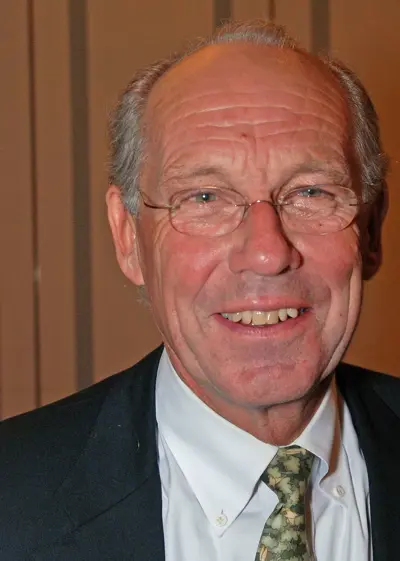
Jørgen Randers is a Norwegian academic, professor emeritus of climate strategy at the BI Norwegian Business School, and practitioner in the field of future studies. His professional field encompasses model-based futures studies, scenario analysis, system dynamics, sustainability, climate, energy and ecological economics. He is also a full member of the Club of Rome, a company director, member of various not-for-profit boards, business consultant on global sustainability matters and author. His publications include the seminal work The Limits to Growth (co-author), and Reinventing Prosperity.
