Henry Highland Garnet Quotes
Rather die freemen than live to be the slaves.
Henry Highland Garnet, 1815-1881, Minister, "An Address to the Slaves of the United States," National Negro Convention, Buffalo, August 1843
Sourced by: Eigen's Political and Historical Quotations


Franklin Delano Roosevelt used the phrase in his Third Inaugural Address {32529}. But the earliest expression that we have found is the Mexican leader Emiliano Zapata {46999} Franklin Delano Roosevelt later used the phrase in his Third Inaugural Address {32529}. But the earliest expression that we have found is the Mexican leader Emiliano Zapata {46999}. This was one of the great quotations to come out of the Spanish Revolution. It inspired freedom loving people the world over, then and through this day.

Soon after, he led 960 men, women and children in a mass suicide at Masada.

See Joseph Addison which may have been the inspiration for this famous quote: {613374}.


See also {612345} for a contemporary description of the Slavs.

Marion was the initiator of Guerilla Warfare and he and his men traveled lightly spending much time in the South Carolina swamps. They had few supplies and when chased by the British could not stop to hunt. The British called him the “Swamp Fox”. The American colonists at this point still thought of the British as “their countrymen.”


The first sentence of this quotation was a favorite of Paine's. He had earlier used it in Common Sense in 1776. See {635451}.


The glorious spectacle of eighteen millions of people, struggling to burst their chains and be free.
The entire speech was translated into Spanish and read to great applause to Latin American revolutionary regiments.


Executed by the English for his part in the Easter Uprising.


St. Domingue was the name of Haiti which had had the only successful national slave revolt, but it was incredibly bloody with many casualties.
The organization sent 2,100 volunteers to fight for South American independence from Spain.
He had been King of Portugal and then had come to the Portuguese colony of Brazil where he led a revolution against Portugal, declared independence from the “mother country, and was elected as Emperor of Brazil. The Colony was much larger and richer in natural resources than the “mother country.”

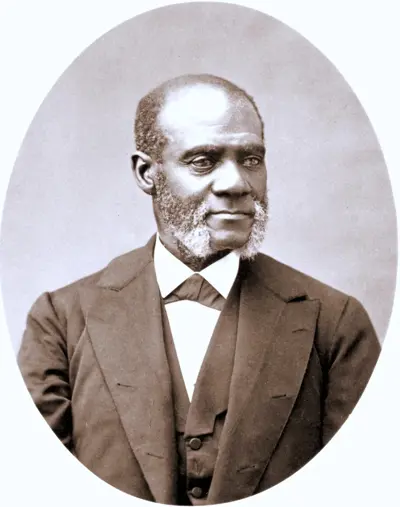
Henry Highland Garnet was an African-American abolitionist, minister, educator and orator. Having escaped with his family as a child from slavery in Maryland, he grew up in New York City. He was educated at the African Free School and other institutions, and became an advocate of militant abolitionism. He became a minister and based his drive for abolitionism in religion.
