Jean Baptiste Joseph Fourier Quotes
Primary causes are unknown to us; but are subject to simple and constant laws, which may be discovered by observation, the study of them being the object of natural philosophy.
This is one of the first written statements that primary causes should be studied by man and not just accepted as mysteries created by God. At the time, all of the sciences and mathematics were considered part of natural philosophy.
Jean Baptiste Joseph Fourier, 1768–1830, French Mathematician & Physicist, The Analytical Theory of Heat, 1878
Sourced by: Eigen's Political and Historical Quotations

This was one of the great scientific predictions of how science would develop.


This was a time when the church and establishment only recognized the Bible and the views of the authorities as a means of knowing and validating knowledge. By appealing to the individual’s own judgment and empiricism he was far ahead of his time. See {586127}.


Much of modern science involves non-intuitive concepts that can rarely if ever be discovered using common sense. It was hard enough for most people to accept the notion of an infinite number, but now we know that there are many infinite numbers and they are all different form one another. Darwinian thinking was contrary to most learned thought of the day, and even much public opinion today. Even Albert Einstein had to struggle to comprehend the findings of Quantum Mechanics which are very non intuitive—one object can be in two different places at the same time. Meanwhile, most people are totally unaware that the world around is does not correspond to normal human intuition and common sense. Yet these are the same and only tools that we continue to use in making decisions about our society. And the fundamental truths of yesterday, the foundation of past thinking and glory, are the naïve simplifications and errors of today and become the superstitions of tomorrow.


This is a very important historical quotation regarding the conflict between Science and Religion. What this quotation shows it that the accusation that the study of science undermined religious belief was a common accusation in the 17th century as well as today. Here Boyle gives the best argument against the accusation, However, despite the fact that this then seemed to be an irrefutable argument and it seems so today even, the accusation is continuously made with small fundamentalist religious factions attempting to reduce the influence of science on society.


At the time, the public investment in science was just exploded as a result of the Manhattan Project, the effort that researched and built the first atomic bomb. By the end of the 20th century, a period of a little more than 50 years science research was funded in the billions of dollars and even correcting for inflation, the investment (Federal, State, and Local) had multiplied many fold.

Recent progress in the physical sciences--especially the biological sciences—has caused some to centralize the role of the individual in physical science also. With the human genome decoded, most medicine will soon be almost totally individualized.

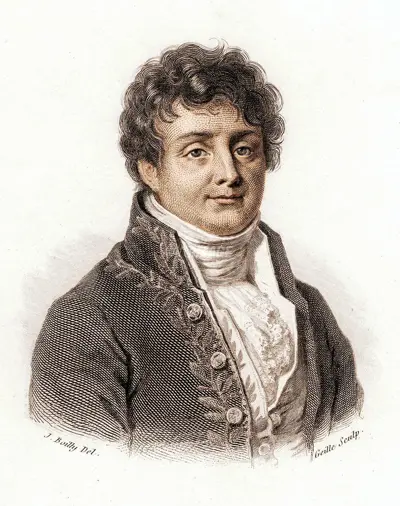
Jean-Baptiste Joseph Fourier was a French mathematician and physicist born in Auxerre and best known for initiating the investigation of Fourier series, which eventually developed into Fourier analysis and harmonic analysis, and their applications to problems of heat transfer and vibrations. The Fourier transform and Fourier's law of conduction are also named in his honour. Fourier is also generally credited with the discovery of the greenhouse effect.
