Michael Beschloss Quotes
Presidents fall into second-term slumps for different reasons.


The reference was to President George W. Bush.


The president had served two terms. The Constitution, passed in 1993 and endorsed by him, prohibited a third term. However, by 1999 he was considering a third term. There appeared to be no one in his political party who could beat the opposition who had been very critical of his autocratic Presidency.


The President’s party in Congress stands election every two years, so the president only has a little more than a year to get tough things done. The mayor, in contrast, had a four term and because he was a bipartisan independent representing both parties, didn’t need to campaign for his party members on the City Council. Therefore, he thought, that it was easier for him to take a controversial position and spend the time to persuade the people and build support for the position.

Reagan, Ford, Nixon, Clinton


In the original constitution there was no limit to the number of 4 year terms the President could serve. By the 1840’s there was much concern that a President could even serve 2 terms and there was a movement to limit the presidency to one term of which Harrison was a leading proponent. His death and short time in office, ended that initiative. . There was an “unwritten” rule that presidents would only serve at most two terms until TR tried for a 3rd but failed only because of a rigged Republican convention. After FDR was elected to 4 consecutive terms, the Republicans pushed through the 22nd Amendment limiting the President to two terms. The irony was that the first president that was affected by the new standard was Republican Eisenhower who probably could have won a 3rd term. Then Ronald Reagan could probably have won a third term even though he was already suffering from Alzheimer’s disease in his second term. Democrat William Clinton could also have likely won a third term were it not for the 22nd Amendment.


Hamilton thought that the Executive Branch should be co-equal with the Judicial Branch and lifetime tenure should apply to both. This quotation is very important as we consider developing countries and emerging democracies. Some in the third world have Presidents for Life—a concept that most democracies scoff at. But the stability and the independence was important enough to some of the Founding Fathers was actually advocated and considered as we formed the American Democracy.

Critics were divided as to whether this illustrated that Graham was very naïve or very hypocritical. Graham had given Nixon a platform but he attended many Nixon events and was thought of as close to the President. When Watergate finally broke out in the open, Graham, had a major realignment of his view of politicians and has never gotten as close to any politician or appeared to favor a politician since.


The President was a left wing nationalist whose policies were counter to the interests of the United Fruit Company and other American businesses. His plan to build another canal connecting Atlantic and Pacific Oceans threatened to take business and control from the Panama Canal which at that point America owned. The CIA covertly engineered a right wing coup ousting him. At the time, it was US foreign policy to try and change any regime that was not acceptable to American Business interests in Latin America or was socialistic or both.
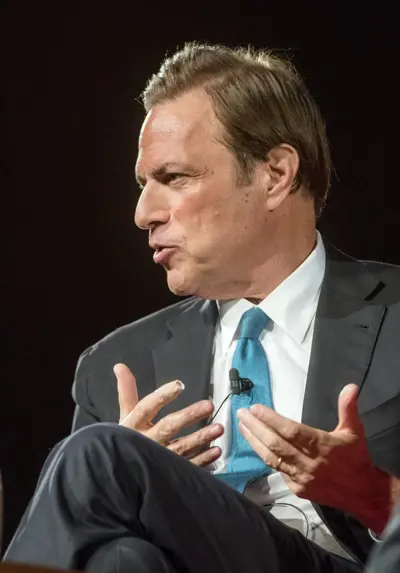
Michael Richard Beschloss is an American historian specializing in the United States presidency. He is the author of nine books on the presidency.
