John Stuart Mill Quotes
Political discussions fly over the heads of those who have no votes, and are not endeavoring to acquire them.
John Stuart Mill, 1806-1873, Member of Parliament, British Political Economist, Representative Government, 1861
Sourced by: Eigen's Political and Historical Quotations


At the time less than 10% of the Southern Blacks were allowed to vote. The result was that Southern segregationists were elected to Congress even in a state like Mississippi which had a majority Black population, The Southern segregationist bloc was large enough that with a few very conservative Republicans, they formed a coalition could block any civil rights legislation including voting rights reform,

This was a classic debate over universal male suffrage. Rainborough had made a forceful argument for equality as a spokesperson for the Levellers in this famous debate. See {619710}. Ireton eloquently gave the classic counter-argument that property owners had much more at stake and therefore should have much more of a say on governmental affairs. Early America actually sided with Ireton, but modern America holds with Rainborough.


12 Indians had originally come to the new colony from Massachusetts. Williams admitted them with the full rights, including voting rights, of the colonists and opened the way for other Indians who wanted to join. Although a minister and theologian, Williams created the first jurisdiction in America where there was freedom of religion.

The issue was the voting franchise for Negroes in the aftermath of the Civil War.


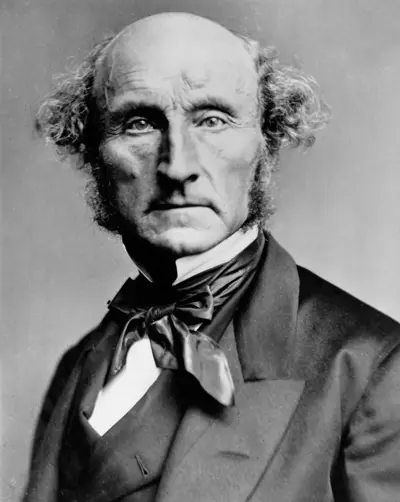
John Stuart Mill, usually cited as J. S. Mill, was an English philosopher, political economist, Member of Parliament, and civil servant. One of the most influential thinkers in the history of classical liberalism, he contributed widely to social theory, political theory, and political economy. Dubbed "the most influential English-speaking philosopher of the nineteenth century", he conceived of liberty as justifying the freedom of the individual in opposition to unlimited state and social control.
