Eleftherios Venizelos Quotes
Perhaps we have acted too hastily. … it may have been unwise for us to send an army into Smyrna, but now that the army is there, it would be more unwise to withdraw it -- to do so would admit military failure and court political defeat.
In the aftermath of World War I the Greeks invaded Turkish held Smyrna to "protect" the ethnic Greek population there. It was a great military blunder and exposed the Greek military to the Turks. This isI a candid private statement of the fact that admission of a military blunder would cause the government to fall that never was made public,
Eleutherios Venizelos, 1864-1936, Prime Minister of Greece, Statement to U. S. Ambassadors Henry White and Henry Morgenthau
Sourced by: Eigen's Political and Historical Quotations


Greek invaders were marching on Istanbul


On military or foreign policy matters his view was that presidents ought not to rule anything in or out so that he/she can keep all the options open and not reduce future flexibility.


Although the two men differed on a very important issue, each admired the other and acquitted themselves politely throughout. Congress explicitly gave the President the powers that he had exercised and won the dispute. But Dixon had also won, and upheld the law as it existed until it was changed.

The Bay of Pigs
Not understanding this point has been the cause of much difficulty for military leaders from the war of 1812 through the Iraq war, the success or failure of the effort depended on a successful peace.


Ironically, Lieberman was using this quotation to campaign against Bush’s son, George W. Bush.
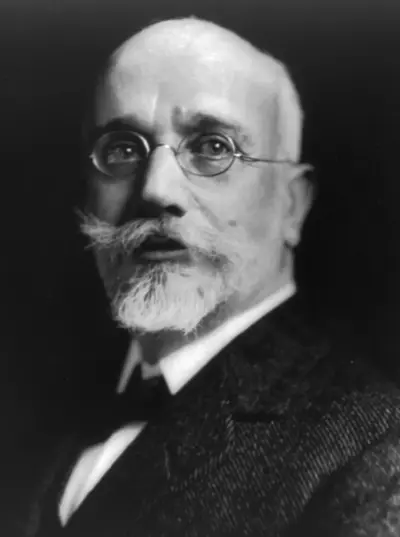
Eleftherios Kyriakou Venizelos was a Greek statesman and a prominent leader of the Greek national liberation movement. He is noted for his contribution to the expansion of Greece and promotion of liberal-democratic policies. As leader of the Liberal Party, he was elected eight times as Prime Minister of Greece, serving from 1910 to 1920 and from 1928 to 1933. Venizelos had such profound influence on the internal and external affairs of Greece that he is credited with being "the maker of modern Greece", and is still widely known as the "Ethnarch".
