Scott Ritter Quotes
It is hard as an American to support the failure of American military operations in Iraq. Such failure will bring with it the death and wounding of many American service members, and many more Iraqis.
Ritter, Scott. "The 'good' insurgency." Al Jazeera, 9 May 2006.


In the aftermath of World War I the Greeks invaded Turkish held Smyrna to "protect" the ethnic Greek population there. It was a great military blunder and exposed the Greek military to the Turks. This isI a candid private statement of the fact that admission of a military blunder would cause the government to fall that never was made public,

His balanced judgment and concern for American Casualties changed during the Iraq War over a decade later where he insisted on taking steady American casualties even after Saddam had been deposed and American troops were in the middle of a sectarian civil war.


Mahathir, in his moral assessment, fails to come to grips with the fact that the Coalition forces in their Afghan and Iraq activities attempt to kill and injure as few people as possible to accomplish their objective. The terrorists attempt to kill and injure as many people as possible. In the September 11 attack, the buildings could have been attacked late at night so there would be few casualties, and in Bali they could have bombed the facility after it had closed instead of waiting until there was the largest audience. And the terrorist bombs include nails, rat poison, and other additional material designed not to do more building damage, but to kill and maim more people which is their specific objective. Most wars have collateral damage and the parties are required to make a good faith attempt to minimize that. But the terrorists not only make no attempt, but make strong efforts to kill as many as possible. That is a huge moral and ethical distinction.


the modern believe is that democracies are not prone to war, especially against other democracies. Seward, and some others believe that democracies can be pushed into war by politicians you do so for partisan political advantage. Politicians often have to show how tough they are.


Bush assumes that this meant that all the people agreed with his decision to invade Iraq. While that might have been the case, there are other possibilities that many historians, journalists and other analysts have suggested. The Vice President, and his personal staff, were known to have visited them all and lobbied for the invasion. They pressured several of them who may have not wanted to run afoul of what seemed to be the most powerful vice president in American History. Or they may have thought that the decision had already been made, and it was time to join together and loyally support the policy decision that had been made. There were few strong independent thinkers in the top tier as Bush was not intellectually or emotionally inclined to have open staff arguments to work out a policy or very strong advisors with different points of view. The strongest of the advisors like Secretary of State Colin Powell had been lied to and persuaded there was “clear evidence” that Iraq was about to deploy a nuclear weapon. This made Powell an advocate. The intelligence given to Powell and the others was wrong and much was fabricated or obtained from an unreliable source who had been pushed as trustworthy by the Vice President. The CIA Director, had told those all that the evidence and case for the fact that Iraq was developing and close to deploying a nuclear weapon was a “slam dunk”.


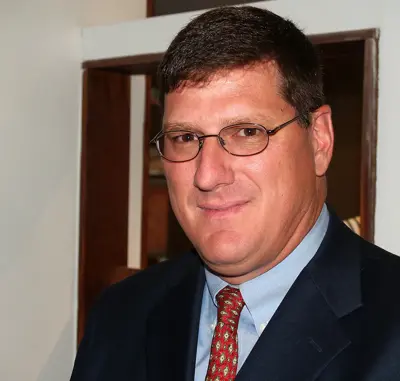
William Scott Ritter Jr. is a former United Nations weapons inspector in Iraq from 1991 to 1998. He later became a critic of United States foreign policy in the Middle East. Prior to the invasion of Iraq in March 2003, Ritter stated that Iraq possessed no significant weapons of mass destruction (WMD) capabilities, becoming according to The New York Times "the loudest and most credible skeptic of the Bush administration’s contention that Hussein was hiding weapons of mass destruction."
