Susan Sontag Quotes
People do these things to other people. Not just in Nazi concentration camps and in Abu Ghraib when it was run by Saddam Hussein. Americans, too, do them when they have permission. When they are told or made to feel that those over whom they have absolute power deserve to be mistreated, humiliated, tormented. They do them when they are led to believe that the people they are torturing belong to an inferior, despicable race or religion. For the meaning of these pictures is not just that these acts were performed, but that their perpetrators had no sense that there was anything wrong in what the pictures show.
She was referring to the pictures that American soldiers had taken of their acts of torture and humiliation of Iraqi prisoners in the Abu Graib.
Susan Sontag, 1933-2004, Writer & Critic, "Regarding the Torture of Others" New York Times, May 23, 2004
Sourced by: Eigen's Political and Historical Quotations


A few American soldiers working as prison guards and interrogators at the Abu Ghraib military prison in Iraq, with poor supervision and mixed signals from the generals and other officers, engaged in a variety of sordid, illegal abuse of Arab. Prisoners ranging from harassment to torture and murder. One activity involved putting a dog leash around the necks of Muslim naked prisoners who were forced to crawl around like a pet dog—hence the reference to a “leash”.

Abu Ghraib was the prison in Iraq where prisoners were brutalized and treated illegally and immorally. Seymour Hirsh was the Pulitzer Prize-winning investigative journalist who broke the story. Levy contrasted that where the Algerian War was full of such atrocities but French intellectuals and press would not publicize it. It didn’t stop for the whole war.


While there were atrocities committed by both sides in the Civil War, the proportion tended to be heavily weighted by Confederate perpetrations. The Confederate officers were not appointed by the command structure and under strict military discipline, but they were elected by the troops and could be so removed (except for the general officers who were appointed by the confederacy). Also, the confederate troops were not as well fed or supplied as the North and they had fewer resources with which to fulfill their obligations to prisoners. In a number of battles, ill-clothed soldiers stripped the Union dead, wounded and prisoners, often naked to use their shoes, blankets and clothing, Union prisoners of war were much more badly abused in the prisoners of war camps like Andersonville which were not under the command of Robert E. Lee.

She had saved over 2000 Jewish Children in the Warsaw Ghetto from Death by the Nazis. As a member of the Polish Resistance, she was caught be the Germans, badly tortured, and sentenced to death which she narrowly escaped.


The writer was born and brought up a Muslim and because he criticizes Islam, he has had a death fatwa issued against him much like Salman Rushdie.

Turkey, under the control of the triumvirate of the 3 Young Turks had massacred almost all of the Armenian population in the area claimed by Turkey. At the end of WWI, there were many demands that those who ordered the policy of a Turkish genocide and those who carried it out by brought to justice—tried and punished. The Sultan had done little if anything to stop the slaughters although he was very weak, Turkey under the Young Turks had also picked the wrong side and allied with the Germans. The Sultan and his Grand Vizier were trying to pick up the pieces and maintain the Ottoman Empire as best they could despite they the fact that they lost control of much of their vast territory. At the Paris Peace Conference, the Grand Vizier virtually admitted the crimes and committed the Turkish government to determining the guilty and bringing them to justice. He actually had 50 of the worst offenders arrested (See {620595}.). However, there were a few tried and one governor of a province was hanged and a few others received short jail sentences. Talaat, the worst of The Young Turks regarding the genocide, escaped to Germany. But he was tracked by a surviving Armenian who assassinated Talaat. The assassin was acquitted by a sympathetic German court which ruled that the extermination of the assassin’s family had been so traumatic that temporary insanity relieved the assassin of criminal responsibility.
In the midst of the Argentine Dirty War where the right wing government was murdering and torturing their political enemies of the left, most of the Catholic Church Priests and other Church Authorities had sided with the government and morally overlooked their atrocities and crimes against humanity. Others were fearful as Bishop Enrique Angelelli had been murdered by the military death squads in 1976. Bishop Hesayne was one of the few members of the Church hierarchy who criticized church officials for their silence.

This argument—that Christians were more cruel and uncivilized than heathens in some respects was very persuasive to many serious white Christians who began to see slavery and the slave trade in a new light.

Although a very aggressive military commander, Grant did not approve of proposals to have wars of extermination which many called for against different Native American tribes.


Odo of Chatillon-Sur-Marne. This is an amazingly distressing quotation for most moderns. Here we have the Pope preaching genocide and ethnic cleansing. This was one of the main triggers of the bloody Crusades and is not forgotten by Muslims in the Middle East Today. As Islam has not changed a great deal in 1000 years, most Muslims assume that the same is true of Christianity and especially the popes and the Roman Catholic Church. This is one of the reasons that the Islamic world reacts so strongly when a pope makes any statement negatve about Muslims and Islam.


At this point, the horrors of the German concentration death camps were generally known by the world press. This quotation shows the denial that the Irish Free State was in about the German Nazi atrocities. The 6-county Nationalsits were the Irish counties in Northern Ireland that did not join the Irish Free State and so far as the Catholic Irish were concerned, the Catholics of Northern Ireland were a persecuted minority undergoing oppression and that was not they believed morally different from the murders of millions of Jews, Gypsies and handicapped people in Europe. If the Free State Irish publicly admitted the difference, they would morally have had to join the allies and De Valera was totally opposed to that. Over 70,000 Irishmen and women rejected the moral stand of their government, and volunteered for the British Army to the great distress of the Free State leaders like De Valera. See {639722} for his personal denial of reality.

A number of the American soldiers refused to obey Calley's illegal order. Some helped some villagers to escape, and a helicopter pilot landed betreen Callery's men and the villagers they were shooting at, and ordered his helicopter machine gun crew to fire on the soldiers if they did back off. The soldiers stopped firing at the civillians. However, his and other reports of the massacre were covered up by the military for a few years. Mai Lai was not the only major war crime perpetrated by Americans in the Vietnam War; there had been a few others. But given the years of fighting and the many opportunities war crimes violations under orders were quite rare. The Viet Cong had many more war crimes that they perpetrated, and our South Vietnamese allies repeatedly committed war crimes against their own people.
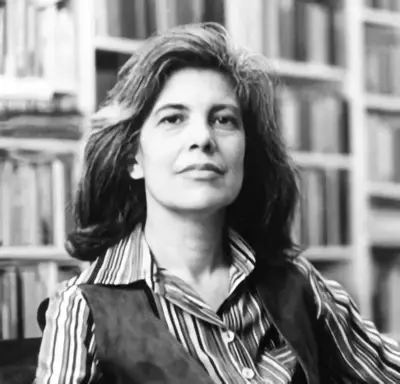
Susan Sontag was an American writer, filmmaker, philosopher, teacher, and political activist. She mostly wrote essays, but also published novels; she published her first major work, the essay "Notes on 'Camp'", in 1964. Her best-known works include the critical works Against Interpretation (1966), Styles of Radical Will (1968), On Photography (1977), and Illness as Metaphor (1978), as well as the fictional works The Way We Live Now (1986), The Volcano Lover (1992), and In America (1999).
