Arthur Schopenhauer Quotes
Patriotism, when it wants to make itself felt in the domain of learning, is a dirty fellow who should be thrown out of doors.
Arthur Schopenhauer, 1788-1860, German Philosopher, Essays and Aphorisms
Sourced by: Eigen's Political and Historical Quotations

“Fain” in this context means “forced by circumstances.” Emerson was suspicious of the facts behind any issue about which all are being extremely patriotic.


Samuel Langhorne Clemens, 1835-1910


The court held that students could not be compelled to recite the Pledge of Allegiance.

For variations on this theme see Stephen Decatur, Meyer London, Charles Churchill and Carl Schurtz

The phrase “Loyalty to the government is our national creed” was advocated by almost all politicians after the Civil War. There were a few communists of the left and libertarians on the right who would disagree but every president tool this position until the administration of Ronald Reagan who then many politicians claimed that the government was a problem and even an enemy of the people. Loyalty was in their view, not to be given to the Government, but to the ideas and ideals of America (as they saw them.) Since then many politicians would talk of “loyalty to America” but not use the McKinley phrase “loyalty to the government.”


Samuel Langhorne Clemens, 1835-1910


He was referring to views like those of Stephen Decatur {599442} and Carl Schurtz {33636}.

This is another example of a common practice amongst dictators and extremists of the Right and the Left. First they define “Patriotic” as accepting and following their norms, politics, regulations or laws. Then they define out any dissidents as not bona fide citizens of the nation. In the next step, the lack of citizenship and patriotism allows imprisonment, torture and even death at times. It is one thing to accuse dissidents as being citizens in opposition to the existing government; it is quite another to define them as no longer a citizen who is entitled to the respect or rights of a citizen. This was typical of both Soviet Communism in the 1950s and the followers of Senator Joseph p. McCarthy in the United States.


This is a classic libertarian position.


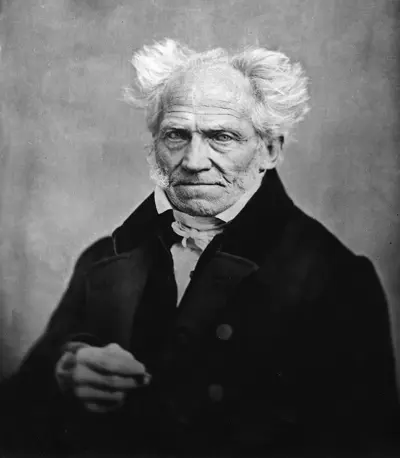
Arthur Schopenhauer was a German philosopher. He is best known for his 1818 work The World as Will and Representation (expanded in 1844), which characterizes the phenomenal world as the product of a blind and insatiable noumenal will. Building on the transcendental idealism of Immanuel Kant, Schopenhauer developed an atheistic metaphysical and ethical system that rejected the contemporaneous ideas of German idealism. He was among the first thinkers in Western philosophy to share and affirm significant tenets of Indian philosophy, such as asceticism, denial of the self, and the notion of the world-as-appearance. His work has been described as an exemplary manifestation of philosophical pessimism.
