Tariq Ramadan Quotes
Part of the French political class is realising that there is are large number of Muslim people coming from the ghettos who want to make themselves heard, politically, especially about foreign policy issues. Its electoral weight can bring back to the forefront the Palestinian issue.
Ramadan, Tariq. To Be a European Muslim. The Islamic Foundation, 1999, p. 182.

The Muslim League at the time was made up of Indian Muslim intellectuals, professionals, and business people. Yet most of the Muslims were in abject poverty.


He was referring to the historical and traditional American political argument of whether the country should be more or less multicultural. There have, even before the founding of the country, this people who favored not only new people from new cultures and nations, but adopting new and foreign ideas. At the same time, there were those who wanted the American culture to not be corrupted of even changed significantly by large number of new people or those new people reaching positions of influence or power. They also often opposed foreign ideas from certain religions to foreign science; from foreign law to foreign philosophy. This interview was just after the Donald Trump Presidential victory.

Some Tibetans believe that the Han Chinese will indeed develop the area, but will in the process change the nature of the area and its culture—that the Han culture will dominate just as initially minority cultures have dominated and transformed South Africa, India, Canada and even the United States. Of course, modernization per se changes a culture radically.


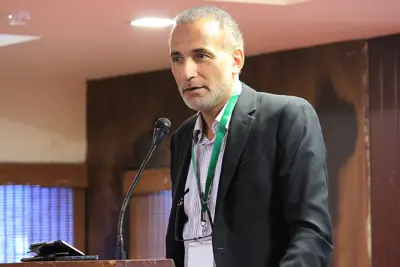
Tariq Ramadan is a Swiss Muslim academic, philosopher, and writer. He was a professor of contemporary Islamic studies at St Antony's College, Oxford and the Faculty of Theology and Religion, University of Oxford, but as of 2018 is taking an agreed leave of absence. He is a visiting professor at the Faculty of Islamic Studies at Hamad Bin Khalifa University in Qatar, and the Université Mundiapolis in Morocco. He is also a senior research fellow at Doshisha University in Japan. He is the director of the Research Centre of Islamic Legislation and Ethics (CILE), based in Doha. He is a member of the UK Foreign Office Advisory Group on Freedom of Religion or Belief. He was elected by Time magazine in 2000 as one of the seven religious innovators of the 21st century and in 2004 as one of the 100 most influential people in the world and by Foreign Policy readers (2005, 2006, 2008–2010, 2012–2015) as one of the top 100 most influential thinkers in the world and Global Thinkers. Ramadan describes himself as a "Salafi reformist".
