Edmund Burke Quotes
Parliament is not a congress of ambassadors from different and hostile interests; which interests each must maintain, as an agent and advocate, against other agents and advocates; but parliament is a deliberative assembly of one nation, with one interest, that of the whole; where, not local purposes, not local prejudices ought to guide, but the general good, resulting from the general reason of the whole. You choose a member indeed; but when you have chosen him, he is not a member of Bristol, but he is a member of parliament.
Burke, Edmund. Mr. Burke's Speeches at His Arrival at Bristol, and at the Conclusion of the Poll. J. Dodsley, 1774, p. 30.


This is the opposite view of the famous quotation of Jeremy Bentham.

This proverb describes a philosophy which is very different from traditional American values. Ironically, in Chinese History, both the right wing and left wing governments have espoused the philosophy implicit in this proverb. Both the Nationalist and Communist factions of the Chinese Civil War both demanded these values.


Speech from the House Chamber of the Texas Capitol after the Supreme Court had ruled 5 to 4 that his opponent, who had won the popular vote, could not do hand counts on contested ballots. He was trying to unify a very divided country. The statement did much to that end.
In one of the most unusual revolutions in world history, Brazil became independent from Portugal via a revolution led by the son of the Portuguese King and heir to the throne, Pedro I. The crown prince of Portugal, led Brazil in her breakaway from Portugal and by popular acclaim became Pedro I, Emperor of Brazil. He is probably the only monarch in history who was the heredity monarch of one kingdom and selected by popular acclaim to the throne of another.


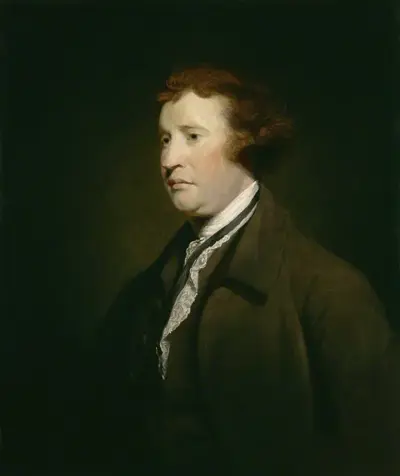
Edmund Burke was an Irish statesman, economist, and philosopher. Born in Dublin, Burke served as a member of parliament (MP) between 1766 and 1794 in the House of Commons of Great Britain with the Whig Party after moving to London in 1750.
