Frederick Douglass Quotes
Outraged men will seek revenge.
Frederick Douglasss, ~1817-1895, Abolitionist & Editor, Recorder of Deeds, District of Columbia, U. S. Minister to Haiti, Quoted in Lerone Bennett Jr., Pioneers in Protest, 1968
Sourced by: Eigen's Political and Historical Quotations


While some of the Serbian holidays commemorate loss of battles, the idea of a specific Day of Revenge is new.

See {639177}.for part of the article. Platt even demanded of President Roosevelt that the Journalist, White, be barred from the White House. Actually White was a very good friend of Roosevelt’s and generally agreed with White’s assessment of Platt.

This was one of Jackson’s official major justifications for his controversial Indian Removal policy. The logic was that since there had been some Indian raids on whites with whites being killed, the whites had a right to retaliate and a good way of doing that was by taking their land and removing them to lands far away. He saw a Christian virtue to the policy as they whites did not raid and kill the Indians. The “logic” such as it was, of course, ignored the fact that there had been white raids and massacres of Indians as well, but in both cases, they were done by a small minority of the Indians and Whites, Jackson’s view was that all Indians should be held responsible for the act of some violent Native Americans. However Jackson had used this guilt generalization before and even used the term “retaliatory vengeance” when he vowed revenge on the British for his treatment as a Prisoner of War in the American Revolution — See Quotation 621975.


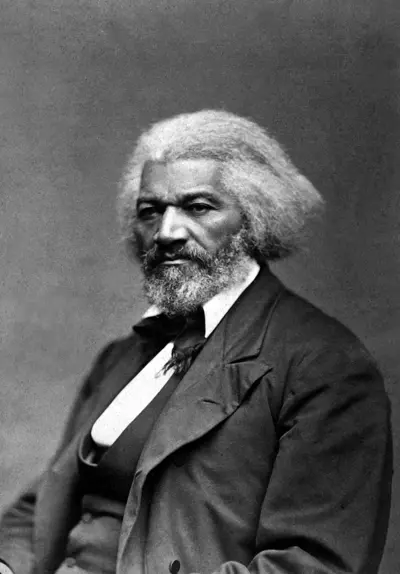
Frederick Douglass was an American social reformer, abolitionist, orator, writer, and statesman. After escaping from slavery in Maryland, he became a national leader of the abolitionist movement in Massachusetts and New York, becoming famous for his oratory and incisive antislavery writings. Accordingly, he was described by abolitionists in his time as a living counterexample to slaveholders' arguments that slaves lacked the intellectual capacity to function as independent American citizens. Likewise, Northerners at the time found it hard to believe that such a great orator had once been a slave.
