Peter Marshall Quotes
Out of profound gratitude for my adopted country, I can only say that I would like in this land to live and die, and while I live to help other people as much as possible, believing that only in service to other people can I possibly express my gratitude for all that America has done for me.
Marshall, Catherine. A Man Called Peter: The Story of Peter Marshall. McGraw-Hill, 1951.


Beaumarchais had provided the Americans with credit in the amount of ½ million French Livres. However, Beaumarchais served the French King Louis XVI as a spy and advisor on foreign affairs. The money had been secretly provided by the French government to help the American cause while still being able to officially deny to England that they were in any way involved in the rebellion. The American agent, Silas Dean, who arranged for the loan saw through the ruse. See {624186} and {624184}.


This may be Kennedy’s most famous line. However he was not the first orator to express this idea however. See Khalil Gibran {601423}, Warren G. Harding {622594} and {629021}, St. John Broderick {595734}, and Oliver Wendell Holmes Jr. {603707} for earlier expressions of similar sentiments. Holmes seems to be the first to express the idea while the earliest seems similar phraseology seems to be the British Politician St. John Broderick in 1893 {595734}. Although, these earlier expressions existed, Theodore C. Sorensen, who assisted Kennedy with this speech and wrote the draft, had distilled it from earlier expressions and views of JFK and said that these were Kennedy’s words. At the time, he stated that was unaware of the Gibran, Harding, Broderick and Holmes sentiments. Gibran had not yet even been translated into English. However it is not clear whether Kennedy himself had inadvertently recollected the phrase from any of the other quotations. (The question was never put to him.) The St. John Broderick quotation is a possible source. Kennedy was quite familiar with British political history, and his father and been U. S. Ambassador to Great Britain. Regardless, the quotation was as great for the place and timing—his inaugural—as it was for the phraseology which might have originated elsewhere.


Jennings had been purchased by Webster and served as his personal butler. As such, and technically a free Black, Jennings had the run of Washington including the Capitol. Webster had freed Jennings with the understanding that Jennings would work off his purchase price. About a year before Jennings had fully worked off his freedom price, he organized a slave escape of Washington house slave by arranging for a ship, the Pearl, to take them North. He wrote his letter to Webster and then went to the docks where the slaves boarded the Pearl. At the last minute, he left the ship and returned to the Webster home feeling that he had given his word and to leave at that time would be dishonorable. The slaves sailed, but were caught by a posse shortly. Most of the slaves were sold as field hands to the deep South, but the white ship’s master, Daniel Drayton, was tried for stealing property. He was defended by Horace Mann, and fined an amount he could not pay and went to jail. The Pearl escape received much notoriety as the escapees were all very “privileged” slaves. Two years later in the Compromise of 1850, selling slaves on the open market was banned in Washington DC. Millard Filmore pardoned Drayton after 4 years in jail. Jennings completed his promise of service and was never prosecuted for his organization of the escape.


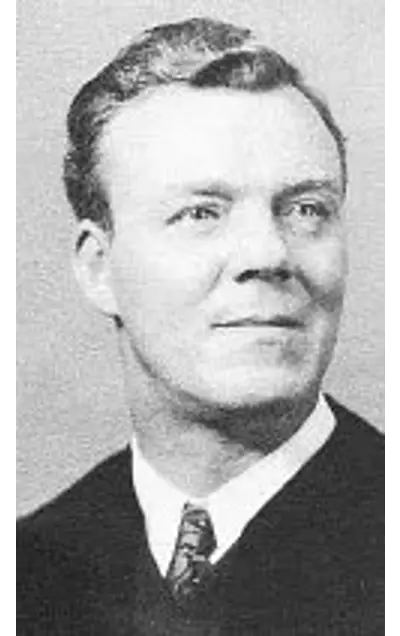
Peter Marshall was a Scottish-American preacher, pastor of the New York Avenue Presbyterian Church in Washington, DC and was appointed as Chaplain of the United States Senate.
