John W. Bricker Quotes
Our Federal judicial rulings have come to reek with the snap judgments of New Dealers.... The Supreme Court of the United States as assumed quasi-legislative authority.
John W. Bricker, 1893-1986, Ohio Governor (Republican), U. S. Senator (Republican, OH), Republican Vice Presidential Candidate, Speech, San Francisco, CA, 1942
Sourced by: Eigen's Political and Historical Quotations


The Roosevelt administration had stemmed the tide of Hoover’s Great Depression but the nation had not yet recovered. The New Deal measures, most of which would be considered fundamental to good government 50 years later was being constantly thwarted by a Supreme Court with a strong arch conservative majority headed by James McReynolds, a virulent, overt, anti-Semitic racist, who hated FDR—see {616652} and {585241}. The situation was to many like that which existed before the Civil War when the Court rendered the Dred Scott decision that so harmed the nation. Frankfurter, not then a Supreme Court Justice, urged Roosevelt to do something lest the American Public lose all respect for the Court and our Constitutional system and have the nation harmed by not allowing reforms like child labor laws to go through. The court actually ruled by a narrow majority that the government could not pass laws making it illegal for 11 year old children to work in coal mines or factories. FDR attempted to add more justices turning the majority into a majority—“packing the Supreme Court”, but that politically backfired. Some of the reforms never went through while others needed Constitutional Amendments like the end to Prohibition.


Jefferson, like most Presidents and ex-presidents, had his concerns about the judiciary and judicial checks, especially of the Executive Branch.


The New Deal liberal Democrats had complained that the Supreme Court was making national policy and law and not interpreting law. They tried to pack the Supreme Court by adding more justices who would be more sympathetic to the New Deal. (See {587549}.) At the beginning of the 21st century it was the conservative Republicans who were making the same claim that the Supreme Court was making law and not interpreting it. The pattern seems to be when the court votes for your side, they are interpreting the law. When they vote for the other side, they are activist—making law improperly.


Judicial Review is the principle which allows a court—judges—to declare an act of the legislature or the executive improper and unlawful. It is a standard principle of American government yet it was not explicitly stated in the Constitution. Hence to some, there is a question about the legitimacy of Judicial Review itself. Many nations do not have it. Many people think it is the most important aspect of a democratic society as it provides a check on both the executive and the legislature.

This kind of attack on the Supreme Court by a prominent legal figure is quite unusual. However, the appointment of the ideologue, Clarence Thomas and his effect on the balance of the court triggered much controversy.

Originally it was published in Boston under the name “A Columbian Patriot.” She was worried about the jurisdiction of the Supreme Court extending throughout the country and yet the nation was very much smaller then than it is today. However, transport and communications have grown with the country.

At the time, there was a very sharply divided Supreme Court with the majority consisting of very conservative justices who did not follow the principle of Stare Decisus and had overturned a number of previous Supreme Court opinions with which their ideology was in conflict.


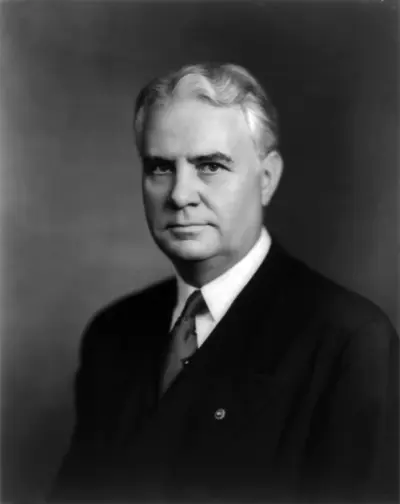
John William Bricker was an American politician and attorney who served as a United States Senator and the 54th Governor of Ohio. He was also the Republican nominee for Vice President in 1944.
