Francis James Jackson Quotes
One of the curiosities that we daily see pass under our windows is the steamboat—a passage vessel with accommodation with near a hundred persons. It is moved by a steam-engine turning a wheel on either side of it, which acts like the main wheel of a mill, and propels the vessel against the wind and tide at a rate of four miles an hour.
The steamboat was one of the first examples of American preeminence in technology. Like the airplane and the computer to come later, it’s importance was generally not recognized early.
Francis James Jackson, 1770-1814, English Minister to the United States, Letter describing New York, 1810
Sourced by: Eigen's Political and Historical Quotations

While many use the invention and development of the Steamboat as an example of breakthrough technology by private enterprise, the reality was that Fulton and Livingston could not raise the private capital to develop the vessels and start operating them until the State government stepped in and granted them a monopoly for 20 years in the waters of the entire state of New York including the Hudson River and New York Harbor. This was one of the first examples of “corporate welfare” and subsidies for development of new technology. Fulton’s company used the courts to enjoin anyone else from operating a steamboat, and Fulton could charge very high rates as he had no competition thanks to New York State. Other boat operators then went to New Jersey which passed its own allowing anyone stopped by NY courts to sue Fulton & Livingston for triple damages. The lower Hudson River and New York Harbor was on the shores of BOTH states and each had an equal claim to jurisdiction. The Supreme Court settled the dispute in one of the major legal cases in American history. See {624485}
Fulton issued permits and seized boats that operated without their endorsement. A steamboat operator, Thomas Gibbons, had received a permit from the Federal Government to operate steamboat service between New York City and the New Jersey Shore. Fulton and New York would not let him traverse Hudson Bay and land in New York. This set the stage for the most important Supreme Court Case on Interstate Commerce--Gibbons v. Ogden (1824). See {621351}.

before there were railroads in the West


While many use the invention and development of the Steamboat as an example of breakthrough technology by private enterprise, the reality was that Fulton and Livingston could not raise the private capital to develop the vessels and start operating them until the State government stepped in and granted them a monopoly for 20 years in the waters of the entire state of New York including the Hudson River and New York Harbor. This was one of the first examples of “corporate welfare” and subsidies for development of new technology. Fulton’s company used the courts to enjoin anyone else from operating a steamboat, and Fulton could charge very high rates as he had no competition thanks to New York State. Other boat operators then went to New Jersey which passed its own allowing anyone stopped by NY courts to sue Fulton & Livingston for triple damages. The lower Hudson River and New York Harbor was on the shores of BOTH states and each had an equal claim to jurisdiction. The Supreme Court settled the dispute in one of the major legal cases in American history. See {624486}


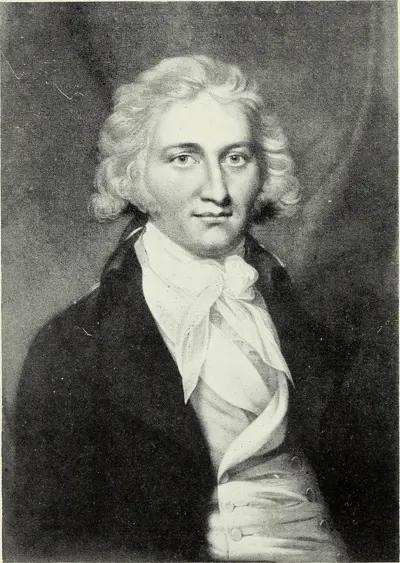
Francis James Jackson was a British diplomat, ambassador to the Ottoman Empire, Prussia and the United States.
