Norman Davies Quotes
One might have thought that 70 years was time enough to work out what really happened in 1939. It isn't the case. Misunderstandings and misinformation abound.
Davies, Norman. "Seventy years on, the myths of 1939 still blind us." The Guardian, 29 Aug. 2009.


Hopkins was a social worker with no military of political experience. But the President trusted him implicitly. Most American military officers and Ambassador to England Joseph P. Kennedy, a Nazi sympathizer & father of JFK, believed that England could not stand up to Hitler. Any military aid we gave England would fall into the hands of the Germans. Everyone was shocked when Roosevelt sent Hopkins to England to make a military recommendation. To impress Hopkins with something he thought Hopkins would be interested in, Churchill led a tour of workers cottages built by the government. Hopkins surprised Churchill and his aids who would never forget this statement & then asked to see the military facilities. Hopkins distressed the American military by recommending that Britain could hold out against invasion if they received military aid. Despite the contrary military advice, FDR accepted Hopkins’ recommendations, and the rest is history. He had been right and much of the military wrong.


Ford was a great admirer of Adolf Hitler who thought Ford was the greatest of the Americans. He was an inveterate Fascist—racism and all. He vehemently opposed United States entry into WWII against the Nazis. He was awarded a medal by Hitler, and he had no qualms about taking it.


She, like her husband and many of the America Firsters, believed that Hitler should be allowed to overrun Europe and Russia. See {613688}. The America First group was a pro-fascist organization who supported the axis powers until they declared war on the United States. Even then, there were some Nazi sympathizers who were anti-immigrant, racist and anti-Semitic in addition to being fascists. Both of the Lindberghs were America Firsters

In the Potsdam Declaration the Allies gave their demands for Japanese unconditional surrender. This was the Japanese reaction. The plans to drop the atomic bombs were then approved.

The military security people were so used to ferreting out communists in the 1930s that they had a hard time adjusting to the fact that the security risks or people who might have German connections or backgrounds. Many immigrant scientists were recruited for work on the Manhattan project to build the atomic bomb and they only did security clearances. The military security people kept checking on any communist background they might have had as opposed to possible connections with fascist organizations. By the end of the war they had adjusted but then had to go back to looking for communists as the Cold War evolved.


In this case, the Speaker of the House attacked the President of his own party for being willing to conduct disarmament discussions with the Russians. He implied that the outcome could be the appeasement of the Russians just as British Prime Minister Neville Chamberlain appeased Hitler in 1938 in Munich, giving the German Fuhrer the “green light” to take over Europe. The Conservative Caucus went even further and explicitly called it “appeasement”. Reagan however always talked about military strength and power, and provided plenty of money for the military and weapons a few of which were boondoggles but he was a very cautious American president in authorizing military force. And he not only was willing to discuss arms control and reductions and enter into treaties for disarmament, much to the distress of the hawks of his own party. Few American Presidents have so well balanced the use of diplomacy with the threat of military force as well as Reagan.
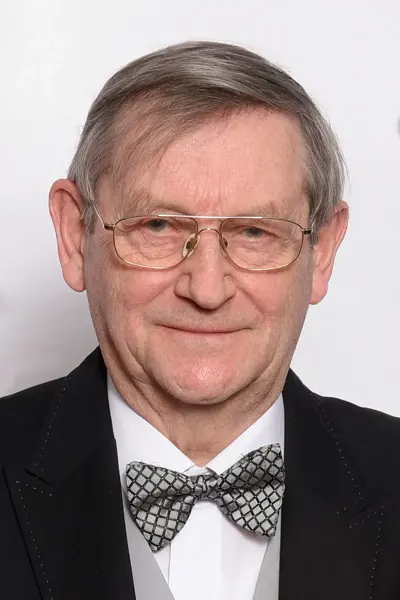
Ivor Norman Richard Davies CMG FBA FRHistS is a Welsh-Polish historian known for his publications on the history of Europe, Poland and the United Kingdom. He has a special interest in Central and Eastern Europe and is UNESCO Professor at the Jagiellonian University, professor emeritus at University College London, a visiting professor at the Collège d'Europe, and an honorary fellow at St Antony's College, Oxford. He was granted Polish citizenship in 2014.
