Douglas Haig Quotes
Once the mass of the defending infantry become possessed of low moral, the battle is as good as lost.
Haig, Douglas. Sir Douglas Haig's Despatches (December 1915-April 1919). Edited by J. H. Boraston, J. M. Dent & Sons, 1919, p. 322.

He was the first of the modern Western poets and is often referred to as the Father of the Humanities


This quotation is historically very interesting. Southern educational materials were extremely scarce with paper one of the commodities most in short supply as the only book paper in the South came from England and had to be smuggled through the Union blockade. Yet the priority was so high that paper was made available in the midst of the Civil War. Confederate civilian morale was a very serious problem while at the same time large numbers of Southern civilians and military were delusional about the Confederate fighting capability. Central to that theme was the myth that the Southern soldier, fighting for such a righteous cause, was several times more effective than his Yankee counterpart. Therefore, the fact that the South was outmanned, out gunned, and out supplied, did not imply a Union victory. So teaching this to the young Southern children who would spread it to the adults on the home front, was a conscious Confederate propaganda effort at this time. Also, the use of these kinds of death and killing arithmetic problems for young children, while considered patriotic in the South was thought to be gross, crude, uncivilized and unchristian by most in the North. The implied 90 to 1 superiority ratio was laughed at in the North, but actually believed by a substantial number of Southerners.


The only soldier ever so honored. See {604732} for Japanese attitude toward surrender.

Very few societies ever had the wealth accumulated so that they could afford prolonged military operations. In addition, long, prolonged conflicts erode morale, both civilian and military. The Afghanistan War that went on for over a decade caused both and put a great strain on the U. S. national budget.


This observation was made when Commander-in-Chief for the 13 American Colonies, General Edward Braddock had organized a military expedition to destroy some of the forts that the French had constructed. (See {37008}.) Braddock and the other military officers thought that the force Braddock had organized what he thought would be overwhelming force that could easily accomplish the objective. But unfortunately for Braddock, Franklin was prescient, See {583428}.
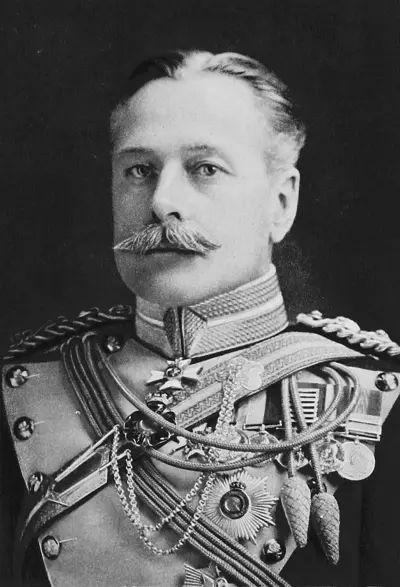
Field Marshal Douglas Haig, 1st Earl Haig, KT, GCB, OM, GCVO, KCIE was a senior officer of the British Army. During the First World War, he commanded the British Expeditionary Force (BEF) on the Western Front from late 1915 until the end of the war. He was commander during the Battle of the Somme, the Battle of Arras, the Third Battle of Ypres (Passchendaele), the German Spring Offensive, and the final Hundred Days Offensive.
