William O. Douglas Quotes
Once the government can demand of a publisher the names of the purchasers of his publication, the free press as we know it disappears. Then the spectre of a government agent will look over the shoulder of everyone who reads. ... Fear of criticism goes with every person into the bookstall. The subtle, imponderable pressures of the orthodox lay hold. Some will fear to read what is unpopular, what the powers-that-be dislike. ... fear will take the place of freedom in the libraries, book stores, and homes in the land.
Douglas, William O. Concurring opinion. United States v. Rumely, 345 U.S. 41, Supreme Court of the US, 9 Mar. 1953, p. 57.

Originally it was published in Boston under the name “A Columbian Patriot.” This was written before the Bill of Rights had been added. Criticism like this led to their addition by Congress in order to obtain ratification.


Virginia had adopted this right almost 20 years before it was added in the Bill of Rights to our Federal Constitution. Mason had drafted it.

For example, most of the documents that are classified as secret in the CIA are so classified because the censor thought the information might be damaging to the CIA’s interest, not the American citizen’s. However, there is a strange logic that is sometimes given to justify censoring material that would embarrass the agency: If the agency is embarrassed, public support and confidence in the agency will be eroded, and that in turn will cause investigations, reviews, and possible diminished budgets. This would be distracting from the agency’s mission of keeping Americans safe, so the public should be kept in the dark about embarrassing material.


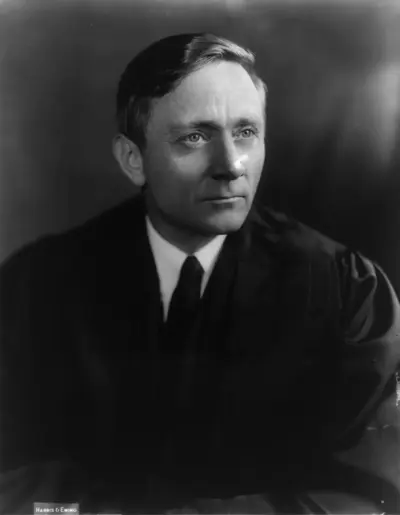
William Orville Douglas was an American jurist and politician who served as an associate justice of the Supreme Court of the United States. Nominated by President Franklin D. Roosevelt, Douglas was confirmed at the age of 40, one of the youngest justices appointed to the court. His term, lasting 36 years and 211 days (1939–75), is the longest in the history of the Supreme Court. In 1975, Time magazine called Douglas "the most doctrinaire and committed civil libertarian ever to sit on the court."
