Sam Ervin Quotes
When people fear surveillance, whether it exists or not, they grow afraid to speak their minds and hearts freely to their government or to anyone else.
Samuel J. Ervin Jr., 1896-1985, U. S. Congressman & U. S. Senator (Democrat, NC), Quoted in Rick Perlstein, Nixonland: The Rise of a President and the Fracturing of America, 2008
Sourced by: Eigen's Political and Historical Quotations


_0_thumbnail_47x47.jpg)

The first non-PRI President in over 70 years.

The Grammar Curmudgeon


Snowden, was a contract worker for Booz Allan assigned to the National Security Agency (NSA). He felt that some of the NSA activities were illegal and unethical and tried to complain to NSA officials who rebuffed him. Despite the fact that he had signed an agreement not to do so, he copied many critical, classified documents that exposed much of the NSA activities that the NSA officials had denied existed—including lying under oath to the Senate. He then made many of them public, violating his oath, breaking the law, and opening up an entire area of government spying which most Americans knew nothing about and about which senior government officials had lied under oath to Congress. They of course wanted to prosecute Snowden who had told the truth, while they had lied. For many Americans, this became a moral and ethical conundrum.


The FBI had obtained a court order requiring apple to write software that could hack into a person's iPhone. Apple, with most other hi-tech companies in support, filed a motion with the court opposing the order. The FBI shortly thereafter withdrew its request for the order saying that they had found other solutions, when they had originally told the court that there were no other solutions. The issue however was and remains a very difficult political, moral, ethical, and legal conundrum.


The Great Firewall of China is the digital control system whereby the Chinese government can block the Chinese public from seeing web sites that are considered dangerous. Generally, these either involve pornography of political viewpoints unacceptable to the government.

Jones constantly told King and other associates that the FBI was tapping their telephone conversations. Senator Joseph McCarthy was a right wing paranoid who imagined communists throughout the government. Jones turned out to be right. During that period, the height of the Civil Rights Movement, the FBI was listening, recording, and transcribing, every single phone call to or from King including the conference calls and calls with his attorney. FBI Director received frequent briefings on what King and his associates were doing. Although he ordered the wiretaps, it was Robert F. Kennedy, then the Attorney General, who had to approve them.
This principle was incorporated into American law by the Supreme Court 1964 decision in Sullivan v. New York Times, where this argument drove the opinion.

The Swedish Pirate Party is devoted to the abolition of copyright and government or control of communications of any kind.

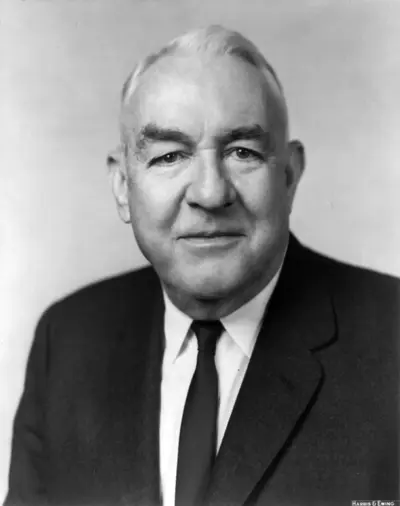
Samuel James Ervin Jr. was an American politician. A Democrat, he served as a U.S. Senator from North Carolina from 1954 to 1974. A native of Morganton, he liked to call himself a "country lawyer", and often told humorous stories in his Southern drawl. During his Senate career, Ervin was a staunch defender of the Jim Crow laws and racial segregation, as the South's constitutional expert during the congressional debates on civil rights. Paradoxically, he was also known for his support of civil liberties. He is remembered for his work in the investigation committees that brought down Senator Joseph McCarthy in 1954 and especially for his investigation of the Watergate scandal in 1972 that led to the resignation of Richard Nixon.
