George Mason Quotes
The freedom of the press is one of the greatest bulwarks of liberty, and can never be restrained but by despotic governments.
Virginia had adopted this right almost 20 years before it was added in the Bill of Rights to our Federal Constitution. Mason had drafted it.
George Mason, 1725-1792, Member, Virginia & Federal Constitutional Conventions, Virginia Declaration of Rights, Article 12, 1776
Sourced by: Eigen's Political and Historical Quotations


Two decades later Jefferson, after his Presidency, had developed a different attitude towards the press. See {585116}.

Referring to the Erdogan government of Turkey. That country elected Erdogan who then turned his back on the Ataturk inspired democracy and instituted many non-democratic policies and practices including jailing civil servants, teachers and journalists who publicly criticize the president or the government.


In September of 2005 a Danish Newspaper published some political cartoons showing the hypocrisy of some Muslims who use Islam to justify murder of innocents and terrorism. Months later, many in the Middle East protested vehemently and Muslim riots broke out and Danish boycotts ensued because the Prophet Muhammad's visage was depicted against Islamic tradition. Many Muslim leaders claimed that insulting religion was an “abuse” of freedom of speech including those from nations which regularly publish material that is virulent against Christians and Jews.

Jefferson was visited by a famous German scientist who read a newspaper in the President's study which viciously attacked Jefferson. The scientist asked why this was allowed in America:


The evils of the time were even worse than in modern times. Most newspapers, journals, and periodicals were in 1835 actually owned and operated by political parties or people totally identified with political parties. In modern times, there are publications and blogs which are controlled by political forces, but most are not.


The Masses was a left wing publication which the then Post Office officials decided were “dangerous”. Later, the Supreme Court would hold that there could not be this degree of political censorship by Post Office officials.


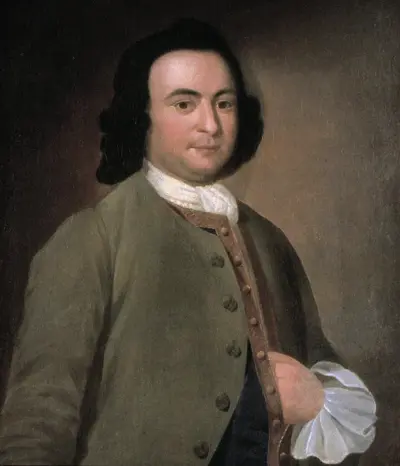
George Mason IV was an American planter, politician and delegate to the U.S. Constitutional Convention of 1787, one of three delegates who refused to sign the Constitution. His writings, including substantial portions of the Fairfax Resolves of 1774, the Virginia Declaration of Rights of 1776, and his Objections to this Constitution of Government (1787) opposing ratification, have exercised a significant influence on American political thought and events. The Virginia Declaration of Rights, which Mason principally authored, served as a basis for the United States Bill of Rights, a document of which he has been deemed a father.
