James Harvey Robinson Quotes
If one seeks to disseminate his ideas by means of periodicals or pamphlets, the post-office officials may decline to transmit anything that does not suit their taste; and the courts have decided that the United States post-office has precisely the same right to refuse to carry The Masses that it has to exclude sulfuric acid and dynamite from the mails.
The Masses was a left wing publication which the then Post Office officials decided were “dangerous”. Later, the Supreme Court would hold that there could not be this degree of political censorship by Post Office officials.
James Harvey Robinson, 1863–1936, Historian & Co-Founder of the New School for Social Research, “The Threatened Eclipse of Free Speech”, The Atlantic Monthly, December 1917
Sourced by: Eigen's Political and Historical Quotations


Twenty year prison sentences were imposed for publishing left wing Bolshevik literature. The case was appealed to the Supreme Court:


Nixon’s views of free speech rights did not recognize the right of those who advocate revolution or government or system change in America. By his standard all of the Founding Fathers should not have been entitled to most of their early speeches. The Supreme Court repeatedly rejected his standard, distinguishing between speech to change or reform the government and illegal action to bring those changes about.


In WWI Congress had passed a law that prohibited anyone from undermining or interfering with the war effort. The defendants had passed out anti-war literature to young men heading for military service. The court then overlooked the First Amendment and came up with a strange logic where the “clear and present danger” was the test of whether the First Amendment would apply. The anti war pamphleteers went to jail. Today, we look back on this and find it very surprising but this is yet another example of erosion of freedom and civil liberties when the nation is at war. By the 1950s, the Supreme Court had reversed itself and the First Amendment was restored to its original intent.


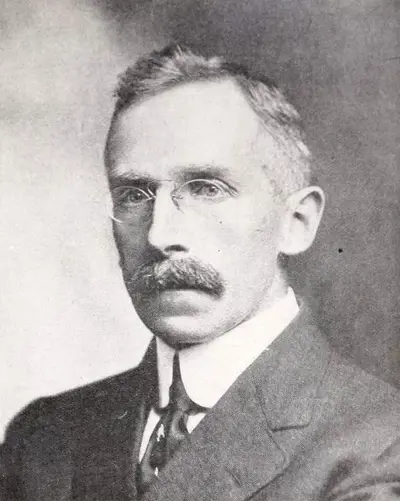
James Harvey Robinson was an American historian, who co-founded New History, which greatly broadened the scope of historical scholarship in relation to the social sciences. Jay Green concludes:
