Arthur Eddington Quotes
Oh leave the Wise our measures to collate. One thing at least is certain, light has weight. One thing is certain and the rest debate. Light rays, when near the Sun, do not go straight.
Eddington, Arthur S. The Observatory, vol. 43, 1920, p. 153.


Actually “normalcy” was not a theory but a slogan or a codeword. See {624061}.

This quotation illustrates how scientifically sophisticated some of the Founding Fathers were.

This quotation was a milestone on scientific and technological development. For the first time in human history the smartest and most creative and visionary people, could not understand or comprehend the direction in which science and technology was moving. It now took people with specialized mathematical capability. Experience and intuitive insight was actually counter-productive in understanding the world as it was being revealed. Intelligence, creativity, perseverance and hard work, for the first time was insufficient. Education and training was the new requirement in addition to the others.


The Roman Catholic Church had stultified scientific thinking for over a thousand years where differing with accepted church doctrine was not only discouraged but was dangerous. Hicletas—see {590328}—realized that the earth rotated around its own axis three centuries before Christ, and his view was in the literature to which learned people had access. Copernicus later communicated this idea to the Pope but in much more delicate terms—see {590327}. He did not have the problems that Galileo endured with the Church for several reasons. There were different men controlling the church, the printing press had been invented and Galileo published a book that many could read, the Protestant Reformation had really frightened the Church fathers who felt more vulnerable and less tolerant.

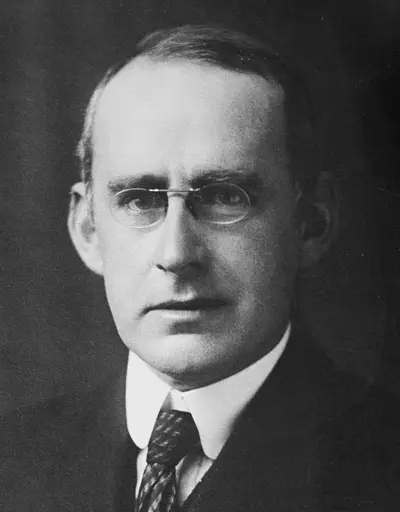
Sir Arthur Stanley Eddington OM FRS was an English astronomer, physicist, and mathematician. He was also a philosopher of science and a populariser of science. The Eddington limit, the natural limit to the luminosity of stars, or the radiation generated by accretion onto a compact object, is named in his honour.
