Lord Byron Quotes
Oh Castlereagh! Thou art a patriot now; Thou cutt’st thy throat that Britain may be saved! Posterity will ne’er survey a nobler grave than this; Here lie the bones of Castlereagh: Stop, traveler.
6th Baron Byron
George Gordon Byron, 1788-1824, [Lord Byron], British Poet & Member of Parliament, Poem written after British Foreign Minister Castlereagh committed suicide, 1824
Sourced by: Eigen's Political and Historical Quotations


Joseph Addison had earlier written of such a situation. Recent research has strongly suggested that Hale may never have said these words. The American patriots wanted to have heroes and may not have been too worried about the documentation and historical research. See {621112}

Ataturk had been a military hero, but was very much opposed to war and military adventurism not unlike the Dwight Eisenhower and Colin Powell type leaders. However, the one thing that he thought worth the sacrifice of his own and other Turkish lives was Turkish independence and sovereignty. Historically, the Ottoman Empire which Ataturk finally ended, had dominated half of Europe and all of the Mid East at the cost of sovereignty of other nations and Ataturk saw no more important virtue with dying for than national sovereignty. See {125322} and {584501}.

Referring to the British war dead:

Quintus Horatius Flaccus. This famous quotation has been echoed in virtually every language and every country of the world. However, see Ernest Hemingway for a counter view.


The people of the American colonies were outraged by the Stamp Act which in effect placed a tax on almost everything operational in the economy at the time by making people buy government stamps to seal virtually all legal documents. Ingersoll had become the icon of the hated Stamp Tax collector holding what was then a very senior position in the Royalist government. The Sons of Liberty, today considered patriots, but then looked upon by the government as a groups of hooligan terrorists, caught up with Ingersoll and kidnapped him and took him to a house in Wethersfield. There he was roughed up and then given the choice of resigning his Stamp Act position or being hanged. He signed his resignation with this statement. The quotation and the incident is used by people who glorify the patriotism and the risk that the Sons of Liberty took for their beliefs. Others, use the quote and incident to illustrate that when such behavior occurs in countries today we often refer to it as terrorism such as in the Iraq War insurgency where the insurgents threatened government officials with death if the did not resign and often made good on their threat. A particular interesting historical story is Ingersoll’s son, Jared Jr. Unlike his Royalist father, young Ingersoll, Jared Jr., was an active patriot, serving in public office and was one of the signers of the U.S. Constitution.


The Poles were fighting the Russians. Pulaski was a Field Marshall. This was before he had come to America and fought in the American Revolution.


Even as he was being executed for his many war crimes, the Field Marshal exhibited the mental perspective of Germanic patriotism that had brought Europe as well as Germany itself so much death and ruin.

It is hard to believe that there are any people in the world that would try and educate youth in this manner, but it is common amongst the ultra fundamentalist Muslims to day. However, it is very similar to what the Christians, including the Pope, preached a millennium ago and what the Japanese preached to their young Kamakasi in WWII.


This would be like an American President firing the congressional chaplains. However this is only one small, but telling, example of Atatuk’s secularization of the nation which had a great deal to do with Turkey becoming a modern great power—by far the strongest and most developed of the Islamic world.


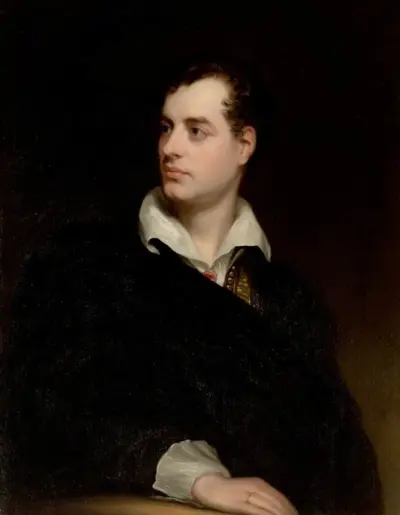
George Gordon Byron, 6th Baron Byron, FRS known simply as Lord Byron, was an English peer, who was a poet and politician. He was one of the leading figures of the Romantic movement and is regarded as one of the greatest English poets. He remains widely read and influential. Among his best-known works are the lengthy narrative poems Don Juan and Childe Harold's Pilgrimage; many of his shorter lyrics in Hebrew Melodies also became popular.
