Lawrence Summers Quotes
Now is the time for us to strike. We must strengthen our foothold in Asia, to ensure no nation overtakes us.

After the breakup of the Soviet Union, NATO expanded to include some fo the former Soviet Nations thus moving NATO territiry to the East--closer to Russia, whose leaders percieved that the expansion was hostile and dangerous for the indpendence of Russia. What made the situation more complex is that the American Secretary of State, when the Soviet Union was very powerful, had made an agreement with the Soviets that in return for Russian aquiessance of NATO being extended to East Germany, NATO would not expand further West. But after the collapse of the Soviet Union, Russia was quite weak and NATO expanded east despite the earleir comittment. The US and th eother NATO counties took the pozition the previous comitmnts were not binidng as they were never formally signed. The Russians then decided to take a hard line position and flaunt and use military force to which would stop the Western expansion closer to the Russian border.


Jefferson had been very much pro French and anti British, but the rise of Napoleon and French presence on the American continent shifted his views, culminating in the Louisiana Purchase. See {605059} for Jefferson’s view on the military significance of New Orleans.

Teddy Roosevelt dispatched 16 battleships (The Great White Fleet) around the world to impress the Japanese and others with American naval strength:


In the 1920s and 1930s China was in chaos. Chiang Kai-shek and his Nationalists were officially the government but there was extensive corruption and local “leaders” who fought for control of territories and resources. Chinese were slaughtering each other daily not unlike Bosnia in the 1990s. The Japanese had moved into Manchuria using the pretext that they were saving China by bringing order and security. (In reality they were trying to control additional territory to populate with their rapidly expanding population.) The U.S. opposed the Japanese aggression but privately warned the Chinese Nationalists that they had better get control of the nation. The Nationalists never did. The Japanese expanded into much more of China beginning WWII in Asia. The Nationalists and the communists joined forces to fight the Japanese and after the war, the communists won the allegiance of most of the people. The Chinese government was finally unified, but under the communists.

The practice became extensively used and the phrase along with it during the William Howard Taft administration where the media popularized it.


The United States and England maintained officially that their stance was moral and ethical. And it was for most Americans and Britons. However, there were some, whose motivation was economically self-serving as this quotation suggests. The less control Japan had over China, the more other countries could freely trade with China.

American official foreign policy had been officially isolationist—to not get involved in the squabbles and fights of other nations. Angell however pointed out that even before WWII, America had formally been involved in 6 foreign wars and used military incursions on foreign soil on almost 100 occasions.

China, which had been one of the strongest and most modern nations in the world for 1000 years had lapsed into decay and though a huge nation, rich in resources, with more people than any other had been eclipsed by Japan, America and Europe. Cixi was determined to remedy that, and to a great extent started China on the road to modernization which would take over 100 years more.

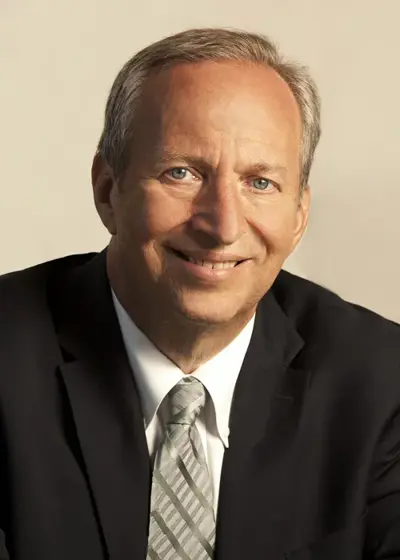
Lawrence Henry Summers is an American economist, former Vice President of Development Economics and Chief Economist of the World Bank (1991–93), senior U.S. Treasury Department official throughout President Clinton's administration (ultimately Treasury Secretary, 1999–2001), and former director of the National Economic Council for President Obama (2009–2010). He is a former president of Harvard University (2001–2006), where he is currently (as of March 2017) a professor and director of the Mossavar-Rahmani Center for Business and Government at Harvard's Kennedy School of Government.
