Robert MacArthur Quotes
The departure of the fleet was momentous. It drove me to prayer. I could see in it America's assertion of her right to control the Pacific in the interest of civilization and humanity.
Teddy Roosevelt dispatched 16 battleships (The Great White Fleet) around the world to impress the Japanese and others with American naval strength:
Robert MacArthur, *, Minister, Calvary Baptist Church, New York, December 16, 1907
Sourced by: Eigen's Political and Historical Quotations

This was the 14th part of the Japanese reply to a previously made American peace proposal. The Japanese policy was to unite all of Asia into a co-prosperity sphere controlled by Japan where Japan would militarily conquer those Asian countries which did not “voluntarily” want to join. The Japanese were in the process of conquering China and the United States and Britain had embargoed oil and other material to Japan trying to pressure them to withdraw their troops from China and cease Japanese conquest by force. Japan believed that it was their right to conquer and control Asia and it was beneficial to the region, and that the U. S. and Britain had no right to curtail the expansion that Japan required to assure raw materials and other necessities. At the very time that these negotiations were on going, the Japanese fleet was sailing for the sneak attack on Pearl Harbor. The attack took place the very day this part of the Japanese reply was received.

The American concepts of democracy and human rights have been resented when U. S. policy advocated other nation’s adhering to them.


Meiji the Great

This is the kind of threat that was used by Germany before the First World War. It worked with Turkey, but King Albert realized that being an “ally” of Germany meant losing independence anyway. Belgium would not join Germany, so the Germans invaded Belgium in 1914. Belgians fought with the allies and at the end of WWI, they were able to rebuild their independent state and thrive until they were again invaded by Germany in WWII. Turkey, in contrast, lost their entire empire, as a result of their fighting as German allies in WWI.


Despite a policy of non-intervention in the affairs of other countries, America has frequently found a reason to make an exception to the policy and send troops to a foreign nation to shape the government in a direction to our liking. After WWII America also used covert operations to change regimes or destabilize governments perceived not in America’s interests. Sending troops to Western Hemisphere nations was continued as well but much less frequently than earlier.
The United States and England maintained officially that their stance was moral and ethical. And it was for most Americans and Britons. However, there were some, whose motivation was economically self-serving as this quotation suggests. The less control Japan had over China, the more other countries could freely trade with China.

This was a warning to Saudi Arabia that the United States might seize the oil fields. At the time we were not getting enough oil for domestic needs and the military in Europe and in Vietnam. The King arranged to secretly supply oil to the United States while maintaining to the other Arab countries that it was maintaining the boycott of the West.

The notion of America flexing its military muscles and intimidating other nations by sending a fleet of 16 battle ships around the world was not greeted enthusiastically by some. However in Japan, the reaction was totally positive. The Russo-Japanese War had been ended thanks to the mediation of Theodore Roosevelt (for which he was awarded the Nobel Peace Prize) and America was a model for much of Japan’s modernization. 25 years later the Japanese would view America as an interfering, intimidating bully, curtailing their national aspirations and rights.


At the time, Palestine was technically Turkish territory. Turkey was one of the defeated axis powers in World War I. England, as part of the World War I peace treaties, had control over Palestine as well as most of the rest of the Middle East.

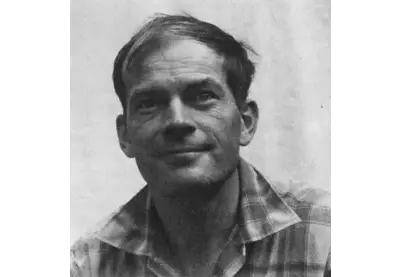
Robert Helmer MacArthur was a Canadian-born American ecologist who made a major impact on many areas of community and population ecology.
