Joseph Story Quotes
Not but that crimes of a strictly legal character fall within the scope of the power…; but that it has a more enlarged operation, and reaches what are aptly termed political offences, growing out of personal misconduct or gross neglect, or usurpation, or habitual disregard of the public interests, in the discharge of the duties of political office
Joseph Story, 1779-1845, U. S. Supreme Court Justice, Referring to the Impeachment Power, 1833
Sourced by: Eigen's Political and Historical Quotations


The convention turned down the constitution and would not ratify it until the Bill of Rights was passed later.
This article of impeachment is quoted often because it shows that criminal activity or violation of a law was not required for impeachment. The time was close to the adoption of the Constitution and presumably reflected sentiment of the founders. Chase however was acquitted as the Senate did not agree that the charges had been proven.


The debate was about the unlimited pardon power of the President. Madison argued that the check was the impeachment power. However, Presidents had tended to make large numbers of pardons just before they leave office so the impeachment power works only as a check for the beginning and middle part of their term.

The reason that this quotation is particularly important is that Taft, in addition to being a President, was also the Chief Justice of the Supreme Court, the only Supreme Court Justice to become President.


In England, the King was above the law. However, impeachment was a tool that could be used against his favorite ministers. In debating the United State Constitution one of the first questions to be determined was whether impeachment could be a tool used against the President or like, England, only the other government officials. Franklin urged the President be included. See also Mason: {584246}.
President Thomas Jefferson himself forwarded to the House some of the evidence against Pickering, the first Federal Judge to be removed by impeachment.
The convention turned down the constitution and would not ratify it until the Bill of Rights was passed later. By modern standards, Presidents in modern times have withheld much information from the Congress and in some cases such as the George W. Bush administrations, the President and his cabinet frequently lied to the Senate, the House, and the American people with no effort made to impeach. Based on the original intent of the Americans ratifying the Constitution, the Executive Branch may not keep anything material to the security of the country secret from Congress. But the center of both parties reject this regardless of what the original intent was.


In England, the King was above the law. However, impeachment was a tool that could be used against his favorite ministers. In debating the United State Constitution one of the first questions to be determined was whether impeachment could be a tool used against the President or like, England, only the other government officials. Mason argued that the President must be included and his view prevailed. See also Benjamin Franklin: {642885}.

This appears to be the earliest use of the phrase which was “borrowed” by the founding fathers in the writing of the U. S. Constitution.
He had not committed any felonies, but these charges were laid under the concept of “high crimes and misdemeanors”.


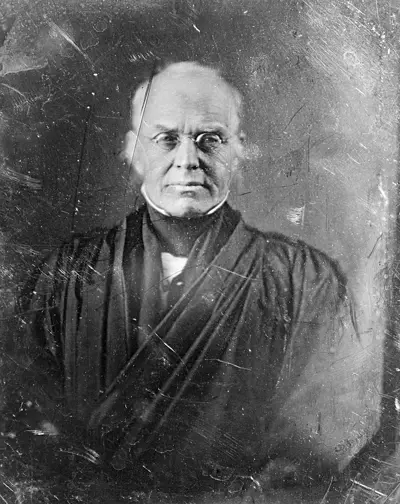
Joseph Story was an American lawyer and jurist who served on the Supreme Court of the United States from 1812 to 1845, during the Marshall Court and early-Taney Court eras. He is most remembered for his opinions in Martin v. Hunter's Lessee and The Amistad case, and especially for his magisterial Commentaries on the Constitution of the United States, first published in 1833. Dominating the field in the 19th century, this work is a cornerstone of early American jurisprudence. It is the second comprehensive treatise on the provisions of the U.S. Constitution and remains a critical source of historical information about the forming of the American republic and the early struggles to define its law.
