Voltaire Quotes
No freedom to the enemies of freedom
Voltaire, 1694-1778, [Francois-Marie Arouet], French Historian & Dramatist, Quoted in Tibor R. Machan, Is the Right Kind of Liberalism Coming Back?
Sourced by: Eigen's Political and Historical Quotations


With so many revolutionary rulers of new nations suppressing all opposition, the history of Ataturk and Turkey is unique. Ataturk was so popular and his People’s Party so successful that there was no opposition and Turkey had one party rule. However, Ataturk was determined to have Turkey become a parliamentary democracy as good as the Western nations of Europe. So a tradition of multi-party democracy was needed. So Ataturk actually went to his friend Fethi Okyar and asked him to start an opposition party and oppose the government. Fethi was a strong supporter of the revolution and generally was in concurrence with Ataturk and the People’s Party on everything. Ataturk however convinced him that they had to start a tradition that would take Turkey through the future, and he did create a new party-- Serbest Cumhuriyet Fırkası (Liberal Republican Party) and worked hard to find differences with the People’s Party and the Government. One immediate contribution was the oversight that the new party provided—a strong tradition that exists to this day in Turkey.


While many people hold that view today, in the 17th century this was truly a radical notion. There were NO democracies at the time and this philosopher argued that the citizens had a need to know that might supersede the need for the state to maintain secrets from enemies. Spinoza was one of the most feared intellectuals in human history-feared that is by the established power structures. He is the only known person who was excommunicated by the Catholics, the Jews and the Muslims-all were forbidden to read his works. He was the enemy of authority and advocated personal reason as the guide for men.

This quotation is a great demonstration of how much wiser and the better politician of all the crowned heads of Europe that Queen Victoria was. There were stirrings of freedom and desire for parliamentary government throughout Europe. Queen Victoria, even though and perhaps because she was a young woman, had a great feel for fairness and reasonableness and had read a great deal of history. There were some radical red socialists calling for complete radical revolution scaring European Royalty profoundly. They reacted very conservatively and with reaction, reverting to more tyrannical practices of the past urged in that path by very conservative, right wing advisors. Victoria also had little respect for some of the monarchs who had little interest in their people and much with their personal power and wealth. In the end, it was England which was the only nation which never had a serious radical socialist / communist threat, and that had much to do with Victoria’s political acumen and wisdom.

His views are a mix of modernism and fundamentalism. He favors democracy and elections but also favored the Taliban destroying the great ancient Buddha statues when he was called an idol worshipper for urging the preservation of art.


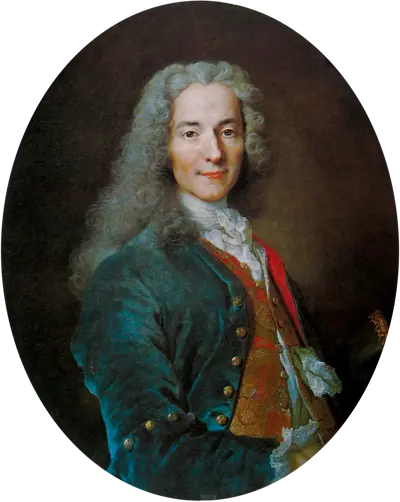
François-Marie Arouet, known by his nom de plume Voltaire (/vɒlˈtɛər, voʊl-/; also US: /vɔːl-/; French: [vɔltɛːʁ]), was a French Enlightenment writer, historian, and philosopher famous for his wit, his criticism of Christianity—especially the Roman Catholic Church—as well as his advocacy of freedom of speech, freedom of religion, and separation of church and state.
