Richard Henry Lee Quotes
No free government was ever founded, or ever preserved its liberty, without uniting the characters of the citizen and soldier in those destined for the defense of the state...such area well-regulated militia, composed of the freeholders, citizen and husbandman, who take up arms to preserve their property, as individuals, and their rights as freemen...
Richard Henry Lee, 1732-1794, Member of the Continental Congress, Signer of the Declaration of Independence, U.S. Senator (VA), Charleston State Gazette, September 8, 1788
Sourced by: Eigen's Political and Historical Quotations


Note the phrase “well regulated militia.” This is the exact same phrase which the Founding Fathers chose to use in the Second Amendment of the Bill of Rights over a decade later. And in this amendment the right to bear arms is provided for the “well regulated militia” and not for individuals as the Supreme Court has ruled many times. This quotation shows that the phrase was not just drafted by the founders, but had a clear and established meaning of which they were aware. Many people think that the phrase did not have a known meaning at the time but this quotation shows differently as the Constitutions of all the States were available to and studied by the Congress and most educated people.


It would be more than a decade before the phrase “well regulated militia” would be added into the Constitution as the 2nd Amendment of the Bill of Rights. This resolution was the last of several passed at this meeting by which Maryland endorsed resistance to the British. So these resolations would have been widely distributed throughout the colonies and known by the leaders. In 1788 Alexander Hamilton Published Federalist 29 which also used the phrase. (See {588393}.) Then on September 25, 1789, the Congress proposed the Bill of Rights and the 2nd Amendment using the same key phrase, “well regulated militia.” Whether the drafters of the 2nd Amendment got the phrase from Hamilton’s Federalist 29 or from the Maryland Resolutions is not known but Hamilton’s was much more current. Did he get the phrase from Maryland? Did Congress get it from him? Did Maryland originate the phrase or was there an earlier use that influenced the Maryland drafters? At this point no one is sure, but the phrase is critical to the meaning of the 2nd Amendment because the Supreme Court has repeatedly held that the Second Amandment does not apply to individuals but only to the State’s right to bear arms within the “well regulated militia” and not as individual citizens. The right is that of the State government and that is why a state can control guns including banning them if they choose. So an individual in America does not have the constitutional right to bear arms. He may have a state constitutional right but in other states he may not use a gun in certain places and may not possess certain types of guns like hand guns which are illegal in New York, Washington DC and some other places.

President James Madison expressed a similar sentiment in his first inaugural address.


See {613949} for the Governor’s letter to George Washington.


This was his political speech about the importance of the state militia. However, in the War of 1812 in September the British attacked and burned the town of Portland which the militia feebly tried to defend. See his private view then: {613332}.


Governor Noble himself was a Colonel in the Indiana Militia. Even in a relatively frontier state like Indiana at the time, there was little enthusiasm for a militia. See {613320}.


Many of the young men who were given this form to fill out, had never been in Japan and some did not even know there was an emperor there. Nonetheless the Japanese American divisions of enlistees were the most effective and most decorated fighting units for America while their parents who had not been born in America were still imprisoned in the internment camps. See {624010}.

The first clause is exactly that used by the state of Pennsylvania in its constitution. These had no reference to the militia as did the Virginia Bill of Rights and later the Federal Constitution.


More than a decade before Hamilton wrote this, a Maryland commission used the phrase “well regulated militia” earlier. (See {588394}.) It would be less than 2 years before the phrase “well regulated militia” would be added into the Constitution in the 2nd Amendment of the Bill of Rights—September 25, 1789. The Maryland resolution was the last of several passed at a meeting by which Maryland endorsed resistance to the British before the actual Revolution. So these resolations would have been widely distributed throughout the colonies and known by the leaders. Whether the drafters of the 2nd Amendment got the phrase from Hamilton’s Federalist 29 or from the Maryland Resolutions is not known but Hamilton’s was much more current. Did he get the phrase from Maryland? Did Congress get it from him? Did Maryland originate the phrase or was there an earlier use that influenced the Maryland drafters? At this point no one is sure, but the phrase is critical to the meaning of the 2nd Amendment because the Supreme Court has repeatedly held that the Second Amandment does not apply to individuals but only to the State’s right to bear arms within the “well regulated militia” and not as individual citizens. The right is that of the State government and that is why a state can control guns including banning them if they choose. So an individual in America does not have the constitutional right to bear arms. He may have a state constitutional right but in other states he may not use a gun in certain places and may not possess certain types of guns like hand guns which are illegal in New York, Washington DC and some other places.


He had been a Congressman before assuming the Presidency. Civil rights was a major subject of debate after the Civil War. One major issue was that of citizenship itself. Many contended that Americans were citizens of a state and dependant on the state for the protection of civil rights. However, the extent to which the Federal government could and should be the guarantor of citizenship issues was in dispute. Today with the issue settled in favor of Federal preeminence, it is hard to realize that this was very unsettled at one point in history. Garfield was one of those leading the effort for more Federal involvement and control.

Karsh was arguing that Arab citizens of Israel should be required to serve in the Israeli army and fight against other Arabs who have repeatedly attacked Israel. The Israeli tradition has been not to require Arab citizens to fight against what might be their own relatives. Karsh and others argue that Italian-Americans fought against other Italians in WWII, German-Americans fought against Germans.
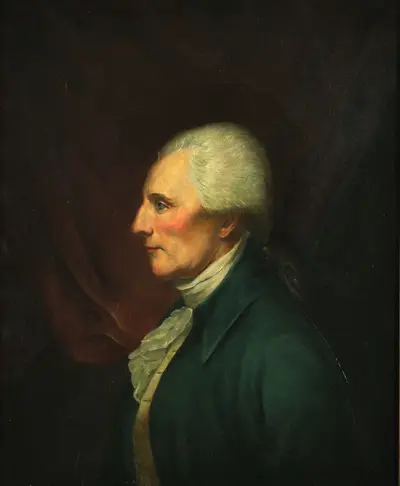
Richard Henry Lee was an American statesman and Founding Father from Virginia, best known for the June 1776 Lee Resolution, the motion in the Second Continental Congress calling for the colonies' independence from Great Britain leading to the United States Declaration of Independence, which he signed. He also served a one-year term as the President of the Continental Congress, was a signatory to the Articles of Confederation, and was a United States Senator from Virginia from 1789 to 1792, serving during part of that time as the second President pro tempore of the upper house.
