Vikings Quotes
Never walk
away from home
without your ax and sword.
You can't feel a battle
in your bones
or foresee a fight.
Viking Eddaic Poem, “Havamal", Before 1000. Translated by Bjorn Jonasson as "The Sayings of the Vikings", 1992
Sourced by: Eigen's Political and Historical Quotations


Urging resistance to Philip of Macedon:

The United States was a new, militarily weak country. Many of its leaders believed that even if our interests were attacked or some citizens abused, it was not worth the United States going to war unless the attack were existential—threatened the very existence of the country. The split was clear during the War of 1812 where in general, New England was opposed to war with Britain, the Atlantic states were not firm on either side, and the South and West (Kentucky was then the West) were the war hawks. Mrs. Madison was a hawk—an unusual expression for a woman and her role as First Lady did not inhibit her from her own independent political opinions. On the War of 1812, Mr. Madison was in favor of war, but was not so unequovical and positive as his wife was.


At the time 18 year old Douglas wanted to enlist to fight in the Philippines where his father was about to be given military command. Young Douglas took his father’s prescient advice and attended West Point instead. In an amazing historical precursor, General Arthur MacArthur ended up in policy disputes with the President over how aggressive American tactics should be. President Taft relieved MacArthur of his command.


Actually, the two world wars were wars of necessity. The Korean War and the Vietnam war are considered by many as wars of choice. But most of our military incursions—the Mexican War, the Spanish American War, Grenada, the Serbian War, Hati incursions and many others were wars of choice for which there were often very good reasons. However, we have to go to war when America is existentially threatened. In that sense, the Iraq War which Kerry was primarily addressing, could be interpreted either way. If it was really true thread. That is what caused most members of Congress to vote to approve the war. However, when that turned out to have been untrue, and it was suspected that the weapons of mass destruction was a deliberate ruse by some.


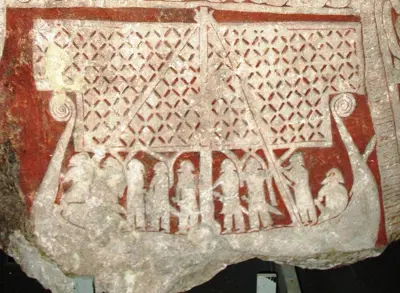
Vikings were the seafaring Norse people from southern Scandinavia (present-day Denmark, Norway and Sweden) who from the late 8th to late 11th centuries raided, pirated, traded and settled throughout parts of Europe. They also voyaged as far as the Mediterranean, North Africa, the Middle East, and North America. In the countries they raided and settled, the period is known as the Viking Age, and the term 'Viking' also commonly includes the inhabitants of the Norse homelands. The Vikings had a profound impact on the early medieval history of Scandinavia, the British Isles, France, Estonia, and Kievan Rus'.
