George Ade Quotes
Never pretend to have money except when you are in straits. The poor man who pretends to have a bank account betters his credit and takes no risk. But the prosperous individual who counts his money in the street, forthwith will be invited to attend a charity bazaar.
Ade, George. Forty Modern Fables. R.H. Russell, 1901.


Actually, even with higher capital requirements, the banks could take more risk but then they would have to risk their own money rather than their depositors’ funds. The depositors funds are at risk but if the risk pays off, only the bank and their executives profit. The depositors get nothing. If the bank loses their risky gamble, the major loss will be covered by the Government via a bail out and/or Federal Deposit Insurance money that protects most depositors. For the Banks, its “heads we win; tails the government loses”.

The Treasure Officials had a reason for bailing out the bondholders. They were afraid that if bank bondholders and owners took big losses at that time, it would “spook” the financial markets and cause even worse panics than then existed. The political pressure would be to bail out the financial institutions which would have lost much more money after the “spooking”. So it was, they argued, less cost to the taxpayer to bail out the bondholders at the beginning and save the bailout costs later. Some argued that there was no reason to bail out the richest people in America if they lose a lot of money so it is not an issue of bail out now or later. History shoed that the financial leaders did have the clout to force the government to bail them out however. There are some who wanted to have a showdown with the wealth banks and other financial institutions and let them go bankrupt and then the economy would right itself. No one really knows for sure which is why Economics is called the “dismal science”—See {596873}.

Leveraged means that the company is not investing all its own money and has borrowed some or much in a highly leveraged situation. He, and most corporate executives, used to be very wary of corporations being highly leveraged. However towards the end of the 20th century the CEO’s—ironically especially in banks and financial companies who should have known better, tended to get away from this worry, and led their companies to very highly leveraged situations. When the Meltdown of 2008 hit, most were so highly leveraged that they became insolvent very quickly and the Great Recession followed.

U. S. Treasury Secretary Larry Summers called Rajan a “Luddite” for this view, but what Rajan observed and predicted was exactly what happened in the Meltdown of 2008 which led to the Great Recession. Rajan was one of the few economists to call this right. Several, invested their own money assuming a crash and made billions. Most, like Summers and the Federal Reserve Chairmen in retrospect admitted that they missed the signs and didn’t connect the dots. See {637168}, {637987}, and {620038}

She had warned about the unregulated derivatives 10 years earlier, but to no avail. See {637987}. Then when she had been proven prescient in the Meltdown of 2008, Congress was more interested in how she thought they could prevent future problems with derivatives. Some were adopted but not all. The financial institutions claimed that they needed derivatives to hedge positions and hence “stabilize” the system. Of the members of Congress who voted on this issue, almost none understood derivatives and credit default swaps were and how they worked. But some were sure they were bad, and others were sure that they were necessary for stability. Derivatives can, and did, get so complicated that the people who originally created them sometimes cannot tell whether they are at risk or not. Even computer cannot calculate the value and risks of these instruments because the values and risks depend on what happens to other companies or instruments which themselves have derivatives insuring them. See {620038} for a good description of the difficulty.
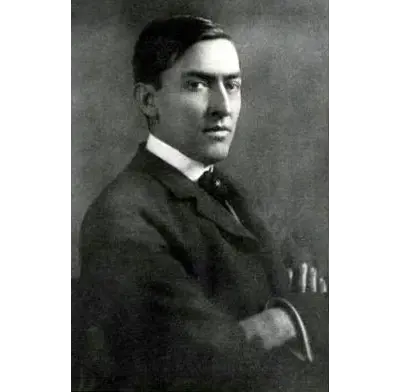
George Ade was an American writer, syndicated newspaper columnist, and playwright who gained national notoriety at the turn of the 20th century with his "Stories of the Streets and of the Town", a column that used street language and slang to describe daily life in Chicago, and a column of his fables in slang, which were humorous stories that featured vernacular speech and the liberal use of capitalization in his characters' dialog.
