Ethel Waters Quotes
Negroes are human beings with exactly the same faults and virtues as members of the other races.
Waters, Ethel, and Charles Samuels. His Eye Is on the Sparrow: An Autobiography. Doubleday, 1951.


In the 1930s African Americans who traveled were subject to countless humiliations whenever the sought hotels, rooming houses, restaurants and other accommodations. Gas stations would not allow them to use bathrooms and they were reduced to using open fields. Traveling and vacationing was, for Blacks, humiliating. Wikipedia: “Green reviewed hotels and restaurants that did business with African Americans during the time of Jim Crow laws and racial segregation in the United States. He printed 15,000 copies each year. In the 1930s, Green began his work by compiling data on stores in the New York area that accepted black travelers, and published his first guide in 1936. Similar guides had been published for Jewish travelers, who sometimes faced discrimination. Green's guide was so popular that he immediately began to expand its coverage the next year to other US destinations, adding hotel and restaurants as well.”


This view was extremely popular with the White establishment but decried by Du Bois and a few other Black leaders. Unfortunately for African Americans and the rest of the country. Washington in this quotation turned out to be very wrong. Blacks quickly produced all kinds of goods and services that whites wanted, but the Jim Crow culture of the South and much of the North would simply not allow any relations between the races that might diminish the friction. Southerners for over 100 years blamed and resented the Negro for the destruction of the South in the Civil War and trying to act as if he was equal to the whites. And Blacks blamed whites for the century of slavery and then not enforcing the laws and denying them civil rights and equality.


The reason this quotation is important, it was the first time in American history that a President had tied racial discrimination to morality. Before that other Presidents had argued against segregation on pragmatic grounds or on legal, Constitutional grounds. Kennedy’s private moral declaration had a huge impact on Black leaders throughout the country who heard about it by word of mouth. That statement forged a bond between JFK and Blacks while most whites did not see anything striking in the statement.

This column outraged most of the Southern politicians but was extolled by African Americans and those who opposed segregation in the country. Her husband, the President, remained silent on the issue. That way the Southern segregationists could be grateful that the President did not endorse that they considered un-American statements, and meanwhile those who were outraged by the existence of legal segregation could take heart that the President did not oppose his wife’s statement.

He would not allow himself to be buried in a cemetery that would not allow Blacks. He was laid to rest in Shreiner's Cemetery, one of the very few racially integrated cemeteries at the time.

Taft, very progressive on racial matters, was a little too optimistic. The “intelligent” Southerners were in the small minority. Only a week after Taft made this statement, Joseph Gorden, a Negro, was lynched outside Greenwood, Mississippi.


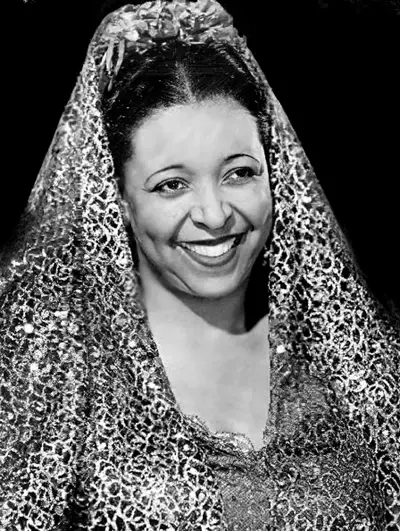
Ethel Waters was an American singer and actress. Waters frequently performed jazz, swing, and pop music on the Broadway stage and in concerts. She began her career in the 1920s singing blues. Waters notable recordings include "Dinah", "Stormy Weather", "Taking a Chance on Love", "Heat Wave", "Supper Time", "Am I Blue?", "Cabin in the Sky", "I'm Coming Virginia", and her version of "His Eye Is on the Sparrow". Waters was the second African American to be nominated for an Academy Award. She was the first African American to star on her own television show and the first African-American woman to be nominated for a Primetime Emmy Award.
