Buffalo Bill Quotes
My mother's sympathies were strongly with the Union. She knew that war was bound to come, but so confident was she in the strength of the Federal Government that she devoutly believed that the struggle could not last longer than six months at the utmost.
Cody, William F. An Autobiography of Buffalo Bill (Colonel W. F. Cody). Cosmopolitan Book Corporation, 1920, p. 57.


After the Presidential years of James Buchanan who protected the South from slavery reform and abolition as the North was gaining political power and the abolitionists were having a greater and greater effect on public opinion in the North. While Southerners did not believe Lincoln would emancipate the slaves, they realized that the majority of the growing nation was opposed to slavery, and more and more Northern states were passimg laws making any slave who sets foot in the State a free person. Slaves coud not only have more reason to run away, but slave owners would not be able to get their “property” back. Lincoln would not help the South as Buchanan did, and the Southerners realized that over time, slavery would no longer be feasible or profitable. Cobb, very experienced at Washington politics, realized the changes that would come and thought that they would be “certain and speedy.” The irony was that if the South had not seceded and simply dragged its feet legislatively, it would have taken two or three decades for slavery to end. However, by seceding and initially fighting so hard and well while poor Union generals were in command, Lincoln was forced to try more drastic measures and issued the Emancipation Proclamation after only a few years. The Civil War and seccession was not only a tactical and strategic error for the South, but rapidly brought about just what the Southerners were fighting to prevent.


While Douglas and Lincoln were political opponents with little love lost between them, both were patriots. Douglas’s position were much more popular in the South, and the moment he realized that Lincoln would win the Presidency, he headed South where he was very persuasive in trying to hold the Union together, but he could not see all the potential rebels and was only effective with some. South Carolina not only seceded, but in order to prevent any changing of minds, some the worst of the South Carolinians, attacked Fort Sumter firing on the American Flag and attacking and capturing the Union troops who were totally outnumbered. The Civil War was then inevitable.


At this point, there had hardly been any fighting and no outrages or war crimes were yet committed by either side. These would come later—more on the Confederate side as they did not want to take the limited resources they had from their troops to fulfil abstract obligations to prisoners of war or to civilians. A few deliberately chose to use terror tactics. The Union troops also at various points in the war got out of hand and looted personal property of civilians. But at this point, this proclamation was just lies and propaganda.
Abraham Lincoln’s major political opponent in Illinois agreed with Lincoln on the criticality of preserving the Union from a split off of the Southern States. He tended to be more willing to pander to the South than Lincoln, however they were strong allies on the fundamental issue. However, what the slavery forces in the south wanted and needed to forever protect slavery was not in the power of any President to do, short of ending the democracy. Slavery was doomed in the long run if there was no way to enforce the Supreme Court’s Dredd Scott decision upon (Northern) states whose constitutions and laws made any slave who entered the state free and whose people would not use its police and legal powers to return runaway slaves. It was the abolitionists who won the majority in the battle of public opinion on slavery. It was only a matter of time when slavery would become untenable in the South. Lincoln was unwilling to force the Northern states to return fugitive slaves against the constitution, laws and will of the people of those states as Buchanan said he was (but had a hard time doing). Also Lincoln was unwilling to allow new territories to enter the union if they allowed slavery.

The Governor was a staunch Confederate supporter but his state legislature majority favored the Union. He was forced out of the governorship when the 1861 election gave the legislature a veto-proof pro Union majority.

More new technology was deployed in the Civil War than any other war in history and Moltke did not realize that the classic European military tactics were obsoleted. However, neither did most of the Southern Generals and many of the Union Generals. Lincoln, Grant and Sherman were the ones who developed strategies and tactics to function in the new world of warfare.

He stated that he had a vision and made these two prophesies that indeed came true. The first was the South Carolina secession starting the Civil War. The second, when the North used former slaves as soldiers who fought their old masters.

Some Lincoln critics point to this quotation to illustrate their belief that Lincoln’s emancipation of slaves was not based on deeply held personal moral convictions but was the result of pragmatic political forces pure and simple. Others believe that this statement to Greeley represented a political tactic to hold Maryland and Kentucky—then slave states—in the Union, but that Lincoln was waiting for the right time to adopt a policy of making emancipation paramount.


The early Union military leadership was so poor and timid that it was not clearly demonstrated that a Confederacy was not viable until later in the war, and the Southerners possessed an extraordinary capacity for ignoring reality and self-delusion, that it was not demonstrated until Grant’s major victories and Sherman’s March through Georgia and the Southern East Coast that an independent South was not going to be.

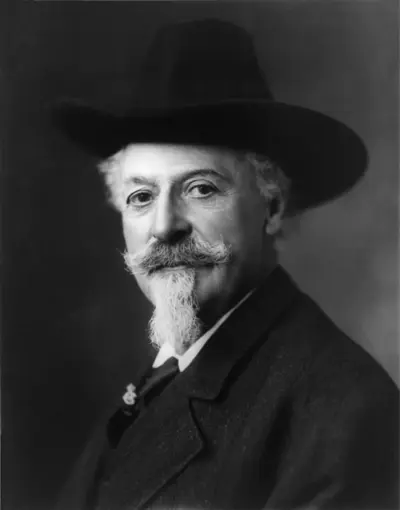
William Frederick "Buffalo Bill" Cody was an American soldier, bison hunter, and showman. He was born in Le Claire, Iowa Territory (now the U.S. state of Iowa), but he lived for several years in his father's hometown in modern-day Mississauga, Ontario, Canada, before the family returned to the Midwest and settled in the Kansas Territory.
